It’s called “Shin Chitose Airport” in Japanese, and the first thing you might notice is how new it looks. Incidentally, “shin” means “new” in Japanese, and that prefix has survived a surprising number of decades. New Chitose opened in 1988; the present terminal area and JR station opened in 1992. One wonders how much longer that prefix will stick. Probably forever. New Chitose Airport is so well-kept and prosperous that some parts look like they opened yesterday.
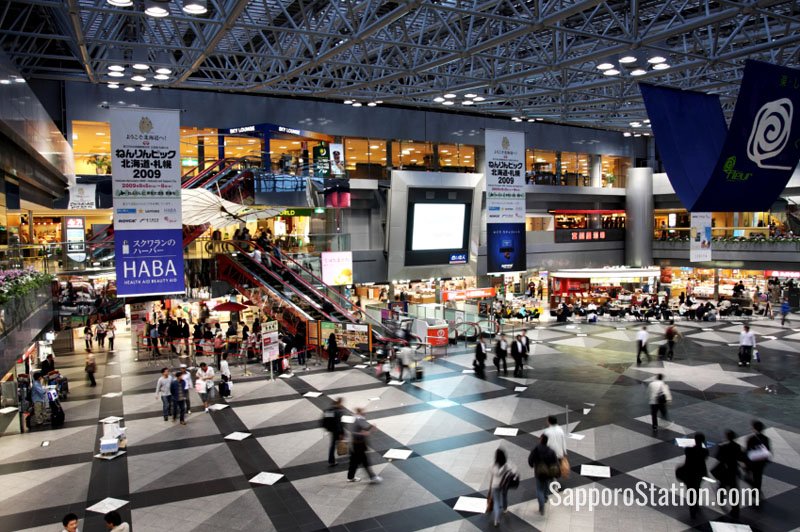
Central Plaza at the New Chitose Airport Terminal
New Chitose (pronounced chi-TOE-say) Airport is Hokkaido’s main air gateway. Only about 45 km (28 miles) from downtown Sapporo (Hokkaido’s largest city), it handled about 25.8 million passengers in 2025, including more than 21.4 million domestic passengers and 4.3 million international passengers. Its Tokyo Haneda – Sapporo Chitose route remains one of the world’s great domestic air corridors: OAG ranked it second worldwide by scheduled seats in 2025, and Chitose City’s route data recorded about 10.45 million users on the Tokyo route that year. It’s only 90 minutes airborne from Tokyo, and frequent domestic flights plus a growing network of scheduled international services make Japan’s northernmost main island feel less remote than Northern Honshu, Shikoku, or even Kyushu.
New Chitose was built as a civilian airport southeast of the older Chitose Airfield, which had been shared with the Air Self-Defense Force. When the terminal and JR station opened in 1992, the civilian airport and the Air Self-Defense Force base were fully separated (you often see Japanese fighter planes roaring across the sky “Top Gun” style, jousting for airspace). But New Chitose Airport is definitely civilian, as you’ll see when you land, pick your way through the tourists and Tokyo commuters, get your bags within a few minutes (most Japanese airports think keeping people waiting for their bags is a social offense; rightly so!), and comfortably find the trains, buses, and taxis to Sapporo. (The JR train is recommended: Airport services run directly from the terminal basement to Sapporo Station, with the fastest Special Rapid/Rapid services taking roughly 33-37 minutes depending on the train; the ordinary fare is 1,230 yen.)
Our guide to Transportation from New Chitose Airport to Sapporo
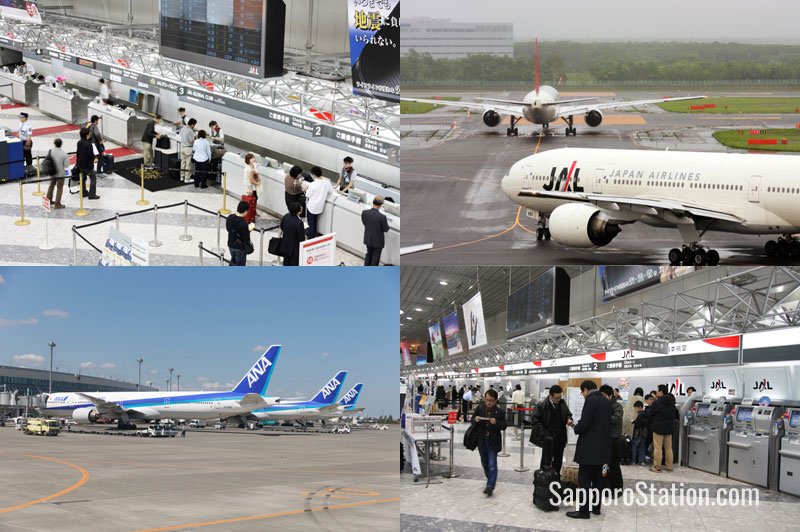
Sapporo New Chitose Airport
Perhaps the best part about New Chitose Airport is how fast you can transit through it. You can find yourself in downtown Sapporo within an hour of landing. Departures can feel efficient too, especially on domestic flights, but follow your airline’s check-in, baggage, and security timing rather than treating the airport’s compact layout as a license to cut things close. If you’re using an international airline, Customs and Immigration at Chitose is surprisingly mellow (in contrast to worry-wart Tokyo Narita International Airport, literally designed to be a fortress).
Or, if you like hanging around airports (and I recommend you do so in this case), give yourself an hour before leaving Hokkaido to meander around New Chitose Airport’s very convenient shopping area. Maybe pick up some famous Hokkaido sweets and savories.
Seriously. Japan has a thriving economy for omiyage (presents) that Japanese tourists must buy for co-workers and relatives if they let slip they’re on a trip. (In fact, many families give money to the traveler, called osenbetsu, specifically earmarked for the purchase of swag). How this phenomenon benefits you is that you’ll see palettes of already-wrapped gift boxes (with an open sample displaying their contents) of famous Hokkaido-brand treats in individually-wrapped servings.
Many small omiyage boxes sit in the easy-to-carry, around-1,000-yen range, though prices vary by brand and season, and I recommend you get a dozen or so for people you might have forgotten back home. They’re designed to be light and portable, and you can just shovel them into your suitcase, or into large plastic bags the shops will provide for boarding (the airlines are very tolerant of carry-ons if they are gift bags). So if you’re looking to gift kith and kin, save your last-minute shopping for New Chitose Airport.
I might add that the airport is two very different places depending on Hokkaido’s dichotomous seasons. If you’re escaping mainland Japan’s sweltering summers, you’ll land in Japan’s most temperate zone (best experienced between July and September), where green abounds and Japanese backpackers and foodies vie for cheap rates on short stays. Summer visitors can find air-and-hotel packages or dynamic packages through airlines and travel agencies, but prices and inclusions change constantly. Compare domestic flight, rail, and hotel options before locking in a Tokyo stopover or onward connection.
If you’re coming up for Hokkaido’s quite long snowy winters, check the Sapporo Snow Festival dates before booking; the 2027 festival is scheduled for February 4-11, and accommodations should be booked many months in advance. You’ll see luggage racks packed with skis and snowboards, and for Niseko and other ski areas, book a winter ski bus or transfer service from the airport rather than assuming walk-up seats will be available. Heavy snow can disrupt flights. New Chitose is built for winter operations, but snow-season closures, cancellations, and delays remain part of the planning reality.
Either way, you’ll be happy you flew into Hokkaido. And so will New Chitose Airport. One nice finishing touch: As your departing plane backs away from the gate, look out the window. Regardless of the weather, the ground staff will line up on the tarmac outside to see you off and wave goodbye. It’s just how they cap off a job well done.
New Chitose Airport – it’s run like airports everywhere should be.
Article by Dr. Debito Arudou. Last updated 17-Aug-2026.