The Hakodate Main Line is a major railway line in Hokkaido that runs from Hakodate in the south as far north as Asahikawa. Along the way the line passes through Kutchan in the Niseko ski resort district, and the popular sightseeing destinations of Otaru and Sapporo. On the southern part of the line there is a branch line called the Sawara Line that forms a loop between Onuma and Mori stations, and this is also officially part of the Hakodate Main Line.
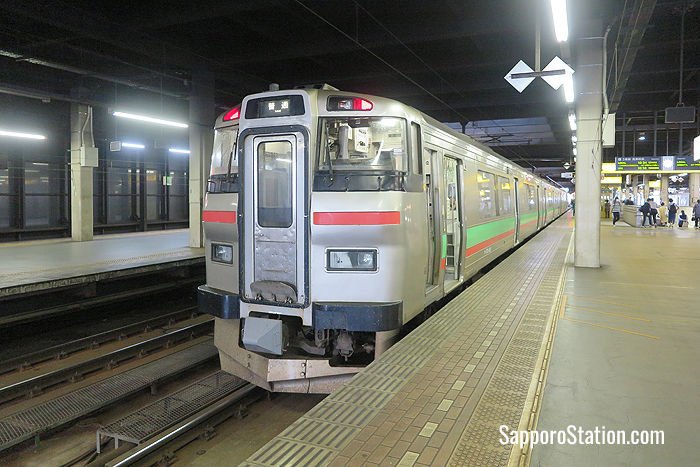
A local Hakodate Line train for Otaru at Sapporo Station
The main Hakodate-Asahikawa route is 423.1 km, and JR Hokkaido lists the Hakodate Main Line at 458.4 km when the Onuma-Mori branch via Oshima-Sawara is included. No single train travels the line’s full official length. Passengers taking the Hakodate Main Line from Sapporo Station will either travel north towards Iwamizawa and Asahikawa, or west towards Teine and Otaru.
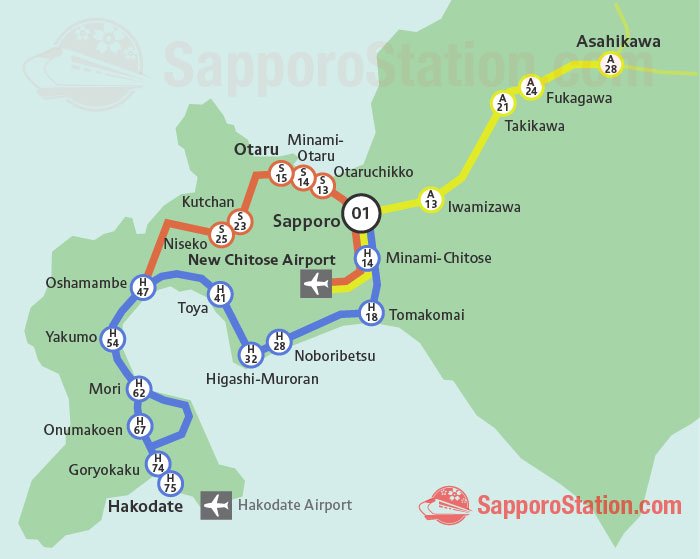
Hakodate Main Line Map
Because the Hakodate Main Line is so long, the direct passenger service between Sapporo and Hakodate (the Limited Express Hokuto) actually bypasses the Hakodate Main Line for most of its length and travels via the Chitose Line and Muroran Line until finally rejoining the Hakodate Main Line at Oshamambe Station.
Passengers traveling west from Sapporo who plan to make stops in Otaru and then Kutchan may well continue their journey south to Hakodate via the Hakodate Main Line. This western route via Otaru, Kutchan and Oshamambe is scenic but slow and infrequent; for most Sapporo-Hakodate trips, the Limited Express Hokuto via the Chitose and Muroran lines is the practical route. The Otaru-Oshamambe section is also part of the parallel-conventional-line discussions tied to the future Hokkaido Shinkansen extension to Sapporo, so check JR Hokkaido timetables before planning a long local-train itinerary.
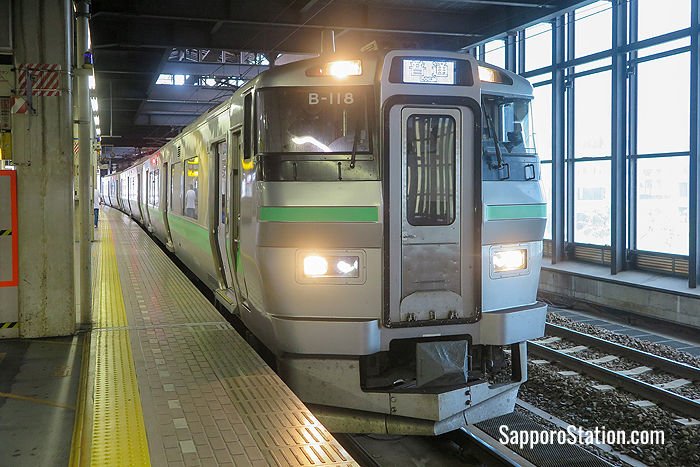
A local train for Iwamizawa at Sapporo Station
At Sapporo Station, Hakodate Main Line services use multiple platforms depending on direction, service type and timetable. Check the departure boards for Teine/Otaru, Iwamizawa/Asahikawa, and limited express services before going to the platform. This line is operated by JR Hokkaido, so JR Hokkaido services on this route are covered by the Japan Rail Pass.
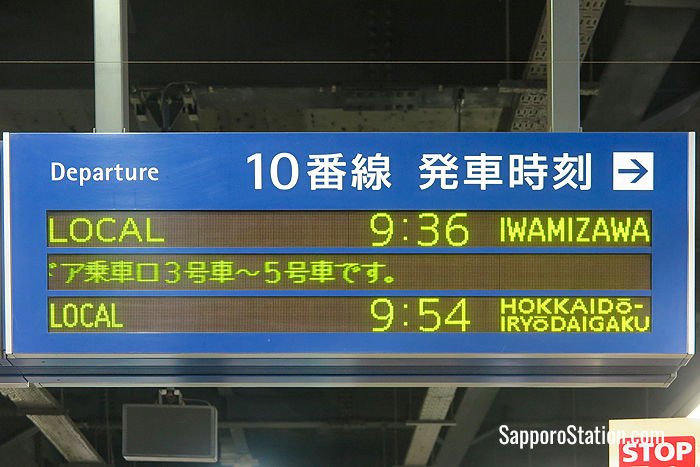
Departure information at Sapporo Station
Key Destinations: Sapporo to Asahikawa
There are 27 stations between Sapporo and Asahikawa, including the terminal stations.
Sapporo – Naebo – Shiroishi – Atsubetsu – Shinrin-Koen – Oasa – Nopporo – Takasago – Ebetsu – Toyohoro – Horomui – Kami-Horomui – Iwamizawa – Minenobu – Koshunai – Bibai – Chashinai – Naie – Toyonuma – Sunagawa – Takikawa – Ebeotsu – Moseushi – Fukagawa – Osamunai – Chikabumi – Asahikawa
This section’s key destinations are listed below with example fares and journey times from Sapporo Station. Example fares and journey times below are for ordinary local or rapid trains unless otherwise stated; JR Hokkaido revised fares in April 2025 and timetables can change, so check the official route finder before travel.
Popular Hotels near Sapporo Station
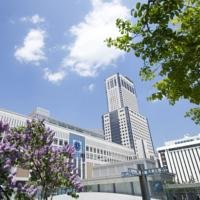



Naebo Station
This station in Sapporo is convenient for Sapporo Beer Museum and Sapporo Beer Garden. Hokkaido Railway Technology Museum is a free museum which is also nearby. It exhibits photographs, models, a diorama and some railway vehicles, but is only open on the 2nd and 4th Saturday of each month between 13.30 and 16.00.
Train fare: 210 yen
Train time: 3 minutes
Shinrin-Koen Station
This station in Sapporo is convenient for the regional culture and nature exhibits at Hokkaido Museum and an outdoor architectural museum called the Historical Village of Hokkaido.
Train fare: 360 yen
Train time: 14 minutes
Iwamizawa Station
The top attraction in Iwamizawa is Hokkaido Greenland amusement park which has 46 rides including Hokkaido’s longest roller-coaster and its tallest Ferris wheel.
Train fare: 1,040 yen
Train time: 41 minutes
Bibai Station
Bibai’s main attractions are the Arte Piazza sculpture park which features works by the contemporary artist Kan Yasuda, and Bibai Snow Land activity park which offers a range of wintertime activities including snow shoeing, snowmobile touring, snow rafting, and snow soccer.
Train fare: 1,380 yen
Train time: around 1 hour and 15 minutes by local train
Tours & Activities in Hokkaido
Wondering what to do in Hokkaido? Discover and book Traditional Cultural activities, Walking Tours, Winter Sports and other experiences to create unforgettable memories during your stay in Hokkaido! Tours & Activities in Hokkaido
Asahikawa Station
Asahikawa is Hokkaido’s second largest city and is a great base for visits to Daisetsuzan National Park or the lavender fields of Furano. The most popular attraction inside the city is Asahikawa Zoo which has animals from all over the world including snow leopards, timber wolves, Steller’s sea eagles, ring-tailed lemurs, and red pandas. Other attractions in Asahikawa include Otokoyama Sake Brewery Museum and Kita-no-Arashiyama craft village which has pottery, glass, and woodwork workshops, ateliers, and galleries.
Outside the city Mount Asahi is a popular location all year round with the Asahidake Onsen hot spring resort at the foot of the mountain, the Asahidake Ropeway carrying passengers to the mountain summit, and Asahidake Ski Resort providing snow sports excitement throughout the winter months.
Limited express fare: 5,440 yen
Limited express time: about 1 hour and 25 minutes
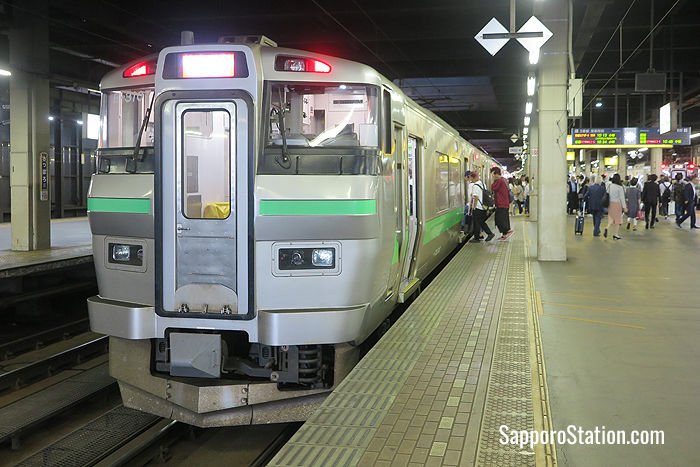
A Rapid Airport service for Otaru at Sapporo Station
Key Destinations: Sapporo to Otaru
There are 15 stations between Sapporo and Otaru, including the terminal stations.
Sapporo – Soen – Kotoni – Hassamu-Chuo – Hassamu – Inazumi-Koen – Teine – Inaho – Hoshioki – Hoshimi – Zenibako – Asari – Otaru-Chikko – Minami-Otaru – Otaru
This section’s key destinations are listed below with example fares and journey times from Sapporo Station. Example fares and journey times below are for ordinary local or rapid trains unless otherwise stated; timetables can change, so check the official route finder before travel.
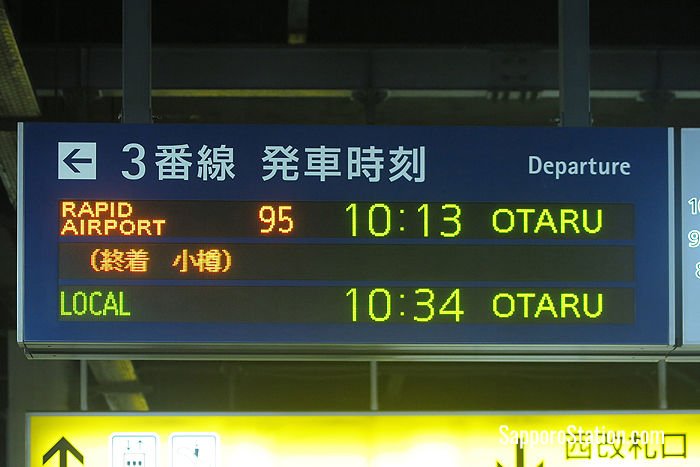
Departure information at Sapporo Station
Soen Station
This station in Sapporo is convenient for Sapporo Racecourse and for the fresh seafood stalls and restaurants at Sapporo Central Wholesale Market.
Train fare: 210 yen
Train time: around 3 minutes
Teine Station
This station in Sapporo is convenient for the digital planetarium Sapporo Starlight Dome. In the winter season Sapporo Teine Ski Resort can be accessed by bus from the south exit of Teine Station.
Train fare: 360 yen
Train time: 15 minutes
Otaru Station
This station serves the scenic port city of Otaru. Otaru has many beautiful historic buildings which are variously used to house art galleries, museums, craft and antique shops, and sea food restaurants.
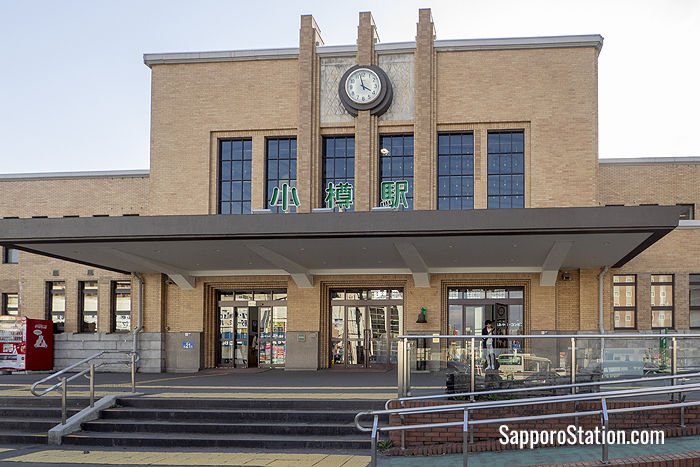
Otaru Station
Attractions in Otaru include the Otaru Museum Main Building with its impressive collection of railway vehicles, the Otaru Museum Canal Building with its local history and natural history exhibits, the stained glass and art nouveau galleries of Otaru Art Base, the glass craft works of Kitaichi Glass and Taisho Glass Palace, and the historic brick warehouses lining Otaru Canal. Fun activities include rickshaw rides, canal cruises, a sea cruise to the Blue Grotto, and taking a ropeway trip to the top of Mount Tenguyama.
Train fare: 800 yen
Train time: around 45 minutes
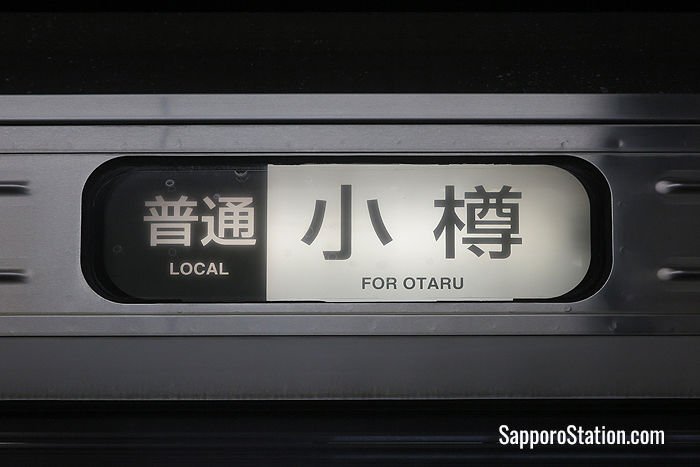
A carriage banner on a train bound for Otaru
Key Destinations: Otaru to Kutchan
There are 9 stations between Otaru and Kutchan, including the terminal stations.
Otaru – Shioya – Ranshima – Yoichi – Niki – Shikaribetsu – Ginzan – Kozawa – Kutchan
Most southbound trains from Otaru terminate at either Shikaribetsu Station or Kutchan Station. If you wish to travel directly from Otaru to Hakodate it is quicker to return to Sapporo and then change to the Limited Express Hokuto. This section’s key destinations are listed below with example fares and journey times from Otaru Station. Services beyond Otaru are infrequent, so check the timetable before planning a stop-and-go itinerary.
Ranshima Station
Ranshima Beach is a popular summertime camping and barbecue spot which is a 5 minute walk from this station.
Train fare: 360 yen
Train time: 18 minutes
Yoichi Station
Yoichi is a seaside town with several attractions including free tours and tastings at Yoichi Nikka Whisky Distillery, the space exploration museum and planetarium at Yoichi Space Dome, and local history museums such as Yoichi Fisheries Museum, the preserved fishing buildings of Old Fukuhara Gyojo, the historic herring mansion of Old Shimoyoichi Unjoya. Hamanaka Moire Kaisui-yokujo is a popular beach in the summer.
Train fare: 470 yen
Train time: about 25 minutes
Kutchan Station
Kutchan is the rail gateway for the ski resorts of Niseko. Resort access from Kutchan, Hirafu and surrounding stops depends on the season; use current local bus, resort shuttle, hotel transfer or taxi information before travel. This area is famous for its world-class winter sports facilities and deep powder snow and the ski season lasts from late November until early May. There are four main ski resort areas, all with excellent facilities. Niseko Tokyu Grand Hirafu is the biggest resort and is served by bus and taxi services from Kutchan Station during the main winter travel period, while Niseko Hanazono, Niseko Village and Niseko Annupuri can also be reached with current bus, shuttle, hotel transfer or taxi arrangements.
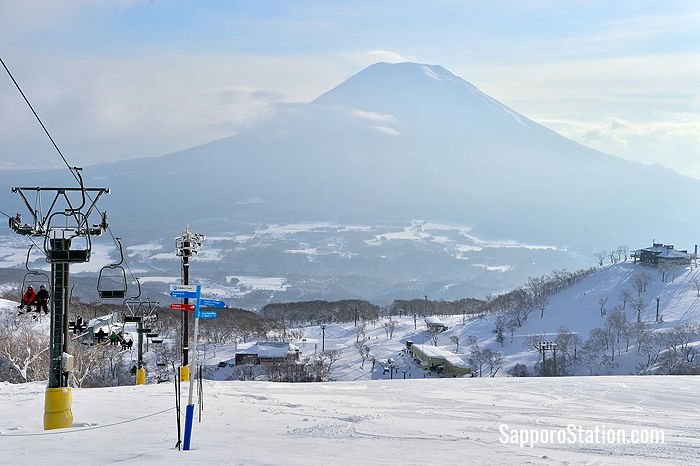
Kutchan Station is the gateway to the ski resorts of Niseko
The natural scenery around Kutchan also attracts visitors in the summer months. Rafting and kayaking on the Shiribetsu River, hiking around Lake Hangetsu and the “mirror marsh” of Kagaminuma, or climbing the 1,898m high Mount Yotei are all popular summertime activities. Inside Kutchan, the Shu Ogawara Museum of Art has a permanent collection of colorful paintings by the local artist Shu Ogawara (1911 – 2002), Kutchan Natural History Museum has exhibits on local history, culture and natural history, and moss phlox flowers can be viewed for at Mishima’s Shibazakura Garden every year from May to June. Kutchan also hosts a lively Potato Festival every August which features a parade and delicious potato dishes.
Several hot spring bathing areas can be accessed from Kutchan. In the Hanazono Onsen area the Zaborin Ryokan is a traditional inn providing luxury accommodation and cuisine with private indoor and outdoor pools. In the Hirafu Onsen area the Vale Niseko is a boutique hotel with ski-to-the-door access, private apartments, an on-site restaurant, and heated outdoor baths.
Train fare: 1,380 yen
Train time: about 1 hour and 18 minutes
Key Destinations: Kutchan to Hakodate
There are 30 stations between Kutchan and Hakodate, including the terminal stations.
Kutchan – Hirafu – Niseko – Konbu – Rankoshi – Mena – Neppu – Kuromatsunai – Futamata – Oshamambe – Kunnui – Kuroiwa – Yamasaki – Yakumo – Yamakoshi – Nodaoi – Otoshibe – Ishikura – Mori – Komagatake – Akaigawa – Onumakoen – Onuma – Niyama – Shin-Hakodate-Hokuto – Nanae – Onakayama – Kikyo – Goryokaku – Hakodate
Passengers traveling between Kutchan and Hakodate must change trains at Oshamambe Station. Connections on this part of the line are sparse, and some route searches may send passengers back through Sapporo and the Limited Express Hokuto if that is faster. This section’s key destinations are listed below, but use the official route finder for the exact fare and journey time on your travel date.
Komagatake Station
This station is convenient for Sonny’s Stable which offers horse riding lessons and horse trekking experiences in the dramatic landscape at the foot of Mount Komagatake.
Train fare: varies by route and connection
Train time: varies by connection; check JR Hokkaido timetables
Akaigawa Station
A short distance from Akaigawa Station is a nature preserve where you can see a large number of white mizubasho flowers blooming in mid-to-late April. This is also the closest railway station to the start of the mounting climbing trail for Mount Komagatake. This distinctive saddleback mountain dominates the landscape of the Oshima region and there is a wonderful view from the top of the trail. However, the distance between Akaigawa Station and the start of the trail at the 6th station car park is around 7 kilometers and will take at least 2 hours and 30 minutes to walk. Although Mount Komagatake stands 1,131 meters high, the trail only goes as far as 900 meters, so you can expect the climb from the 6th station to take between 3 and 4 hours. There are no taxis at Akaigawa Station, so if you wish to go direct to the 6th station car park, exit the train at the next stop, Onumakoen Station. A taxi ride from Onumakoen Station will take around 30 minutes.
Train fare: varies by route and connection
Train time: varies by connection; check JR Hokkaido timetables
Onumakoen Station
This station is a convenient exit point for Onuma Quasi-National Park a scenic area which includes the Onuma and Konuma lakes and Mount Komagatake. Recreational activities in this area include boating, canoeing, fishing, cycling, horseback trekking, and winter snowshoeing. This area is particularly famous for its colorful autumn foliage. In winter a free shuttle bus runs from Onumakoen Station to Hakodate Nanae Snow Park which has courses suitable for beginner and intermediate skiers and snow boarders. This ski resort has a ski school, equipment rental facilities, restaurants, and Hokkaido’s longest gondola ride to take you to the top of the mountain.
Train fare: varies by route and connection
Train time: varies by connection; check JR Hokkaido timetables
Shin-Hakodate-Hokuto Station
Shin-Hakodate-Hokuto is the operating northern terminus of the Hokkaido Shinkansen while the Sapporo extension remains under construction. The Shinkansen provides a direct link between Hokkaido and Tokyo. For more information visit Shin-Hakodate-Hokuto Station guide.
Train fare: from 3,960 yen by local train
Train time: varies by connection; faster options use Limited Express Hokuto from Oshamambe
Goryokaku Station
This station in Hakodate is named after the star-shaped Goryokaku Fort which dates from 1866. The fort’s location is a park, but its five-pointed star shape can be seen very clearly from the observation deck of nearby Goryokaku Tower. A bus runs from the station area to the fort in 15 minutes or you can take a taxi and be there in 7 minutes.
Transfer here to the South Hokkaido Railway Line for services bound for Kikonai.
Train fare: varies by route and connection
Train time: varies by connection; check JR Hokkaido timetables
Hakodate Station
Hakodate is the third biggest city in Hokkaido and also one of the oldest as it was first established in the 15th century. A good way to view the city’s numerous attractions is to take one of Hakodate’s tramcars which can be boarded from a stop outside Hakodate Station.
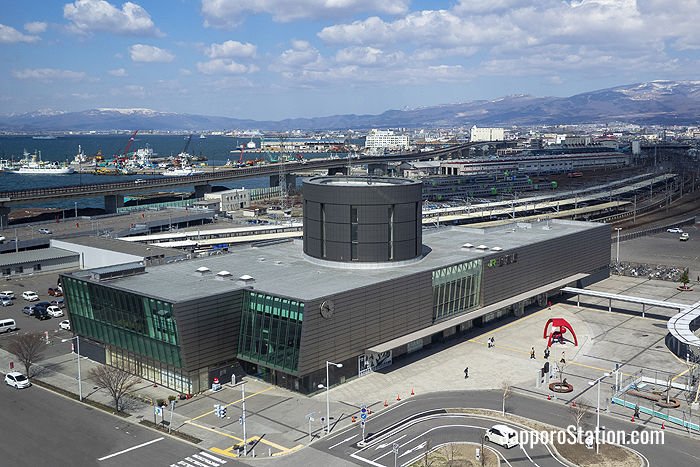
Hakodate Station
The most famous sight in Hakodate is the spectacular nighttime city view from the top of Mount Hakodate. To see it, take a 3 minute cable car trip on the Mount Hakodate Ropeway.
Hakodate’s Motomachi district is a picturesque area with many 19th century Western-style buildings which are illuminated at night. Hakodate’s bay area also has many historic red brick warehouses that have been repurposed as restaurants and shops.
Hakodate Morning Market is a very popular seafood market that opens early, with many shops and restaurants operating from around 5.00 or 6.00 until early afternoon, though hours vary by shop and season. The restaurant arcade in the market is famous for its delicious seafood rice bowls.
Yunokawa Onsen is a hot spring resort in Hakodate with many seafront hotels. Yunokawa Prince Hotel Nagisatei has large indoor and outdoor mineral baths with ocean views, a choice of Western or traditional Japanese style rooms, and facilities that include a sauna, a buffet restaurant, and a souvenir shop. Bourou Noguchi Hakodate is a modern luxury hotel with indoor and outdoor baths overlooking the city, a dry sauna, a Sky Salon for twilight views, Western and Japanese style guest rooms, and private dining.
Hakodate Airport has domestic routes including Tokyo Haneda, Tokyo Narita, Nagoya Chubu, Osaka Itami, Sapporo/New Chitose, Sapporo/Okadama and Okushiri, with seasonal or schedule changes possible. International service includes Taipei, with operators and frequencies changing by timetable period. Shuttle buses link Hakodate Station and Hakodate Airport in about 20 minutes.
Train fare: varies by route and connection
Train time: varies by connection; check JR Hokkaido timetables
Key Destinations: The Sawara Line
There are 8 active passenger stations on the Sawara Line, including the terminal stations.
Onuma – Shikabe – Oshima-Numajiri – Oshima-Sawara – Kakarima – Oshironai – Higashi-Mori – Mori
This section’s key destinations are listed below with example fares and journey times from Hakodate Station. Sawara Line services are infrequent, so check the timetable before travel. Near Onuma, Paard Musee offers horseback riding, farming, and craft workshop activities by advance booking, but access requires advance planning by car, taxi or current local transport rather than a simple walk from a JR station.
Shikabe Station
Shikabe is a seaside hot spring resort town with several hot spring hotels. A local tourist attraction here is Shikabe Geyser Park where columns of hot water jet from the ground every ten minutes.
Train fare: 1,040 yen
Train time: about 1 hour and 4 minutes by direct via-Onuma local train
Useful Information
All train times and fares for the key destinations listed above are examples, and in many cases paying extra for a limited express service will considerably reduce the travel time. To plan your journey, use JR Hokkaido’s official route and timetable search, and check the current JR Hokkaido rail network map before travel.
Article by Michael Lambe. Photos by Michael Lambe, Angkana Unthaya (5,8), ta98/pixta (7). All rights reserved. Last updated 18-Aug-2026.