Odori Park is a wide strip of greenery running east-to-west for 1.5 kilometers through the center of Sapporo city. It is a pleasant space with colorful flowerbeds and walkways lined with benches. Among the lawns and fountains local people and tourists take their ease and throughout the year many of the city’s major events and festivals are held here.
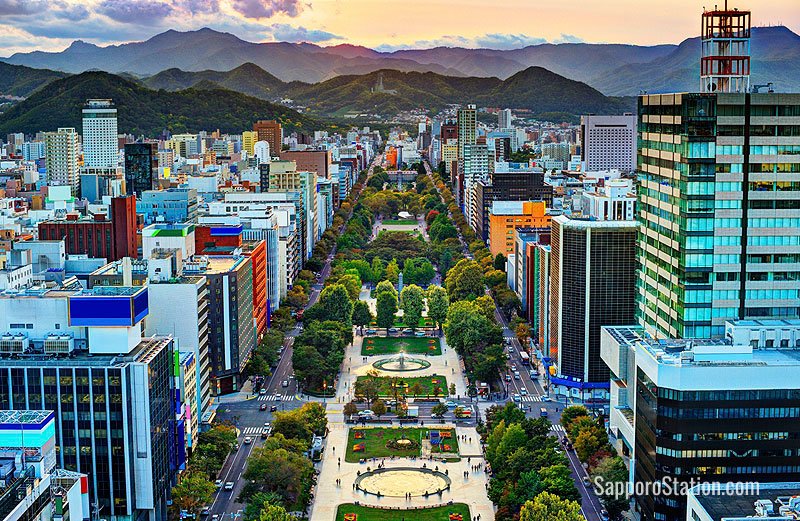
Odori Park – Sapporo’s year-round downtown promenade
The History of Odori Park
Sapporo is a fairly modern city, as it was founded in 1869, and at that time it was laid out in a simple grid pattern with the Soseigawa Canal running north-to-south through the center of the city. Local government buildings were located in the north of the new city, while business and residential buildings were located in the south. Odori Park marks a dividing line between these two historic sections.
The name Odori, basically means “Big Street”. This is because before Odori Park was a park it was actually a street called Shiribeshi Dori. This street was originally constructed in 1871 as a wide firebreak dividing the northern and southern parts of the city. In 1881, as part of a switch to numbered streets and blocks, Shiribeshi Dori was officially renamed Odori.
In the beginning, it was not clear how this broad strip of land would be used. An agricultural exposition was held here in 1878. From 1875 onwards the Hokkaido Development Commission began to introduce Western style flowerbeds, and finally in 1909, the landscape gardener, Nagaoka Yasuhei, was invited to develop the street as a leafy promenade. Nagaoka also designed Nakajima Park which is located further to the south.
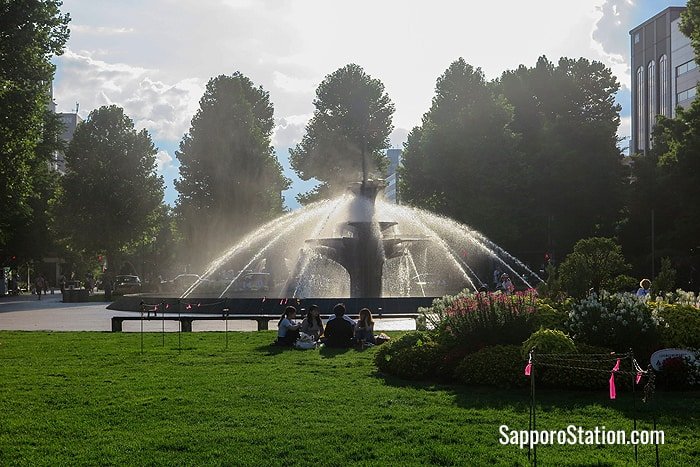
Odori Park is a green oasis of lawns, fountains, and flowerbeds
During the food shortages of World War 2, Odori Park was used for growing crops and vegetables. Immediately after the war part of the park was used as a dumping ground for garbage and snow, while another part was taken over by the occupying US army who built a church and some sports facilities such as tennis courts and a baseball ground. Restoration of the park began in 1950, with lawns and flowerbeds gradually replacing its wartime and postwar uses.
A major part of the park’s revival was the planning of flower gardens. The park’s flowerbeds are tended by local horticultural companies and volunteers. A flowerbed contest, first held in 1954, is also held here every summer.
The park has about 4,700 trees of 92 species which include large trees such as elm, plane, maples, and zelkova. There are also flowering trees and shrubs such as cherry trees and magnolias which bloom in the spring, azaleas which bloom in late spring and early summer, hydrangeas which bloom in July and early August, and roses which bloom through summer and into autumn. Among the trees are about 400 lilacs, the official trees of Sapporo city, which usually bloom from mid- to late May. Flowering times vary with the weather.
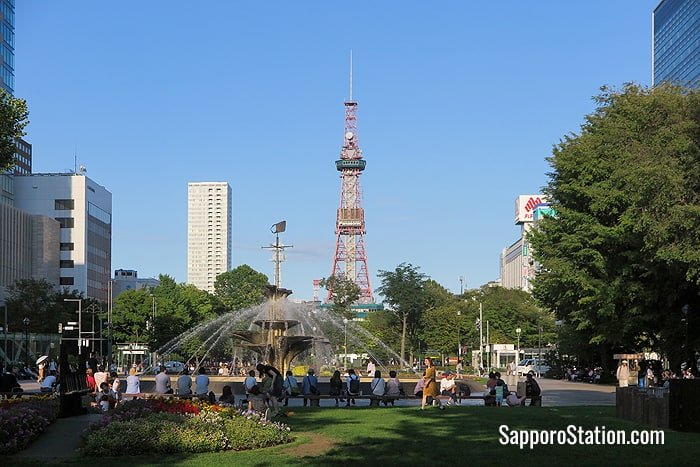
Sapporo TV Tower stands at the eastern end of Odori Park
Things to See
Odori Park covers 12 city blocks called chome which run from Nishi-1-chome in the east to Nishi-12-chome in the west. Each block name is preceded with “Nishi” meaning “west” because the entire park is located to the west of the central Soseigawa Canal.
The park is bordered at either end with two big tourist attractions. At the eastern end of the park, in Nishi-1-chome, you can find Sapporo TV Tower which has souvenir shops, restaurants and an observation deck. Just beyond the western end, in Nishi-13-chome, you can find the Shiryokan which is a historic court building used as a museum, event space, and art gallery.
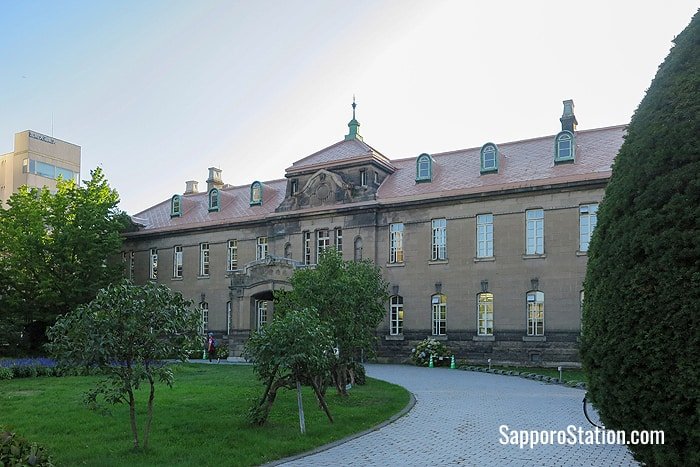
The Shiryokan at the western end of the park
There is a Tourist Information Center at Nishi-3-chome where volunteers provide maps and local information from late April to late October, between 9.30 and 17.30. There is also an official Information Center for the park at Nishi-7-chome which includes a shop and telephone interpretation in English, Chinese, and Korean. This center opens from 10.00 to 12.00 and 13.00 to 16.00, and closes from December 29th to January 3rd. Here you can buy official Odori Park souvenirs such as T-shirts, postcards, keyrings, and magnets.
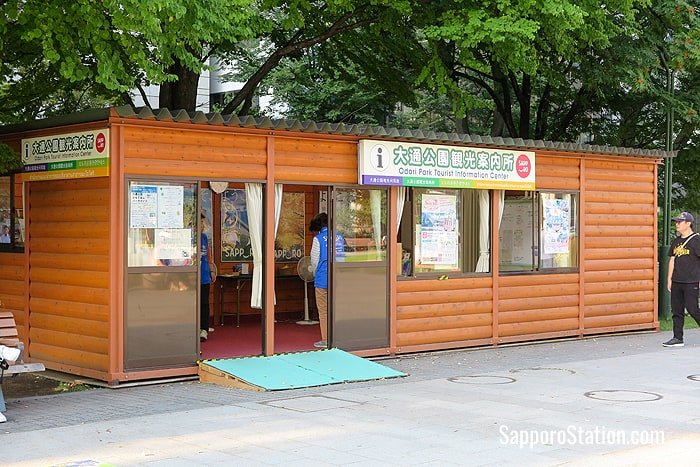
The Nishi-3-chome Tourist Information Center
Sweetcorn stalls called toukibi wagon are set up at Nishi-3-chome and Nishi-4-chome from late April into autumn. These stalls sell locally grown sweetcorn grilled or boiled as a takeaway treat. The Nishi-4-chome wagon closes in rainy weather.
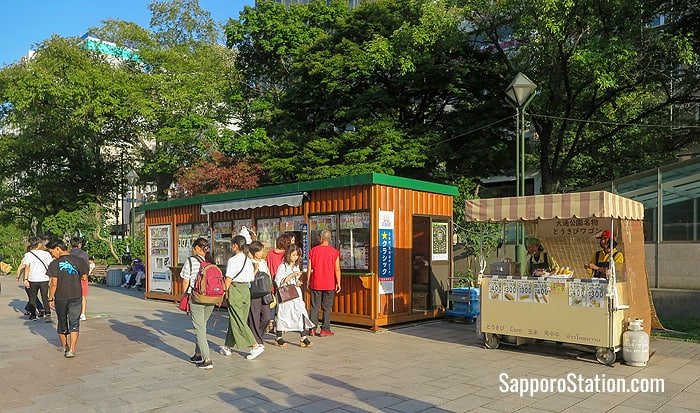
A summer sweetcorn stall set up beside a more permanent takeaway food and refreshment store
The park has many fountains, but the fountain at Nishi-3-chome runs through 16 different patterns in 15 minutes. The fountain operates from late April to late October.
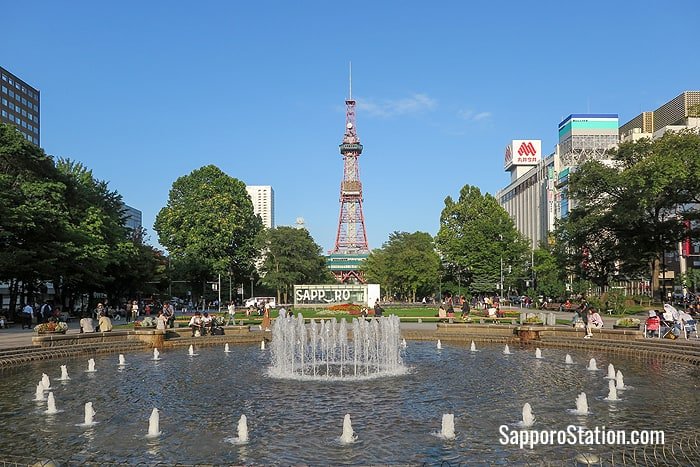
The Nishi-3-chome fountain
There are many statues dotted around the park. “Shepherd Boy” by Takashi Mine was the first statue to be erected after the war and it is a tribute to Hokkaido’s dairy farming industry.
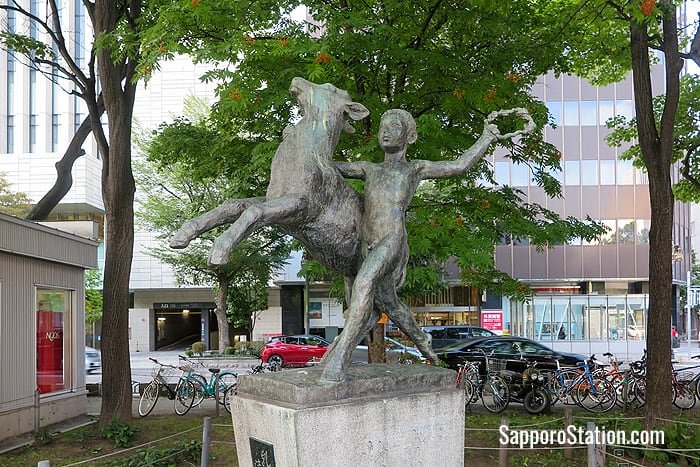
“Shepherd Boy” statue erected in 1956
The statue “Lake Breeze” by Ryojo Yamada was erected in 1976 and was donated by Hokuyo Bank.
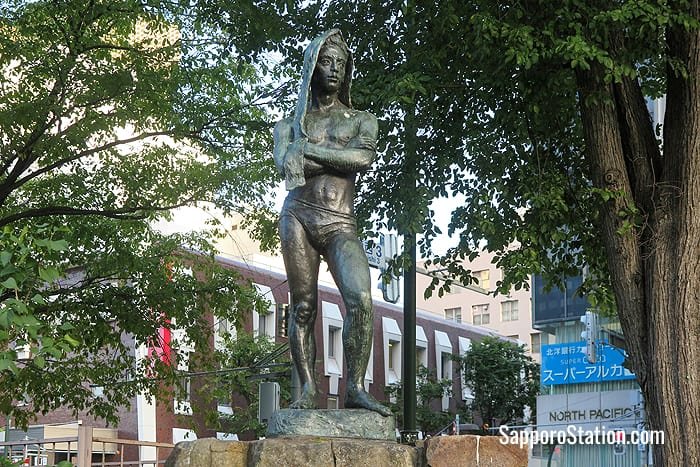
“Lake Breeze” statue
Around Nishi-8-chome and Nishi-9-chome you can find a children’s playground with a slide, and a watercourse that children can splash around in. The watercourse is at Nishi-9-chome and normally operates from June 1st to mid-September, between 10.00 and 16.00.
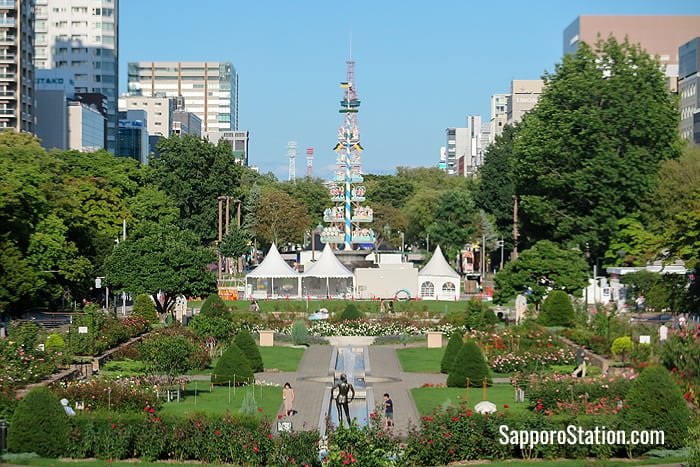
The sunken rose garden at Nishi-12-chome
At Nishi-12-chome the sunken rose garden has more than 1,100 roses of around 60 different varieties blooming from mid-June till October.
Odori Park Sapporo Festivals & Events
Many of Sapporo’s major annual events and festivals take place in Odori Park. Below are the main events that take place here throughout the year.
Sapporo Snow Festival – February
Sapporo Snow Festival is Sapporo’s most popular event and typically attracts over 2 million visitors. This eight-day event is held each February and Odori Park is one of the three main venues. The Snow Festival was actually born in Odori Park in the winter of 1950 when local middle and high school students built the first snow sculptures there and the first festival was held with snowball fights, dog sled races, and a costume parade. From 1953 larger snow sculptures were built, and each February Odori Park features monumental snow sculptures alongside many medium-sized and smaller works. During the Snow Festival the observation deck of Sapporo TV Tower is very popular for its view over the park’s sculptures.
Sapporo Lilac Festival – May
The Lilac Festival, which was first held in 1959, includes musical performances, an outdoor tea ceremony, a wine garden, food stalls, and lilac seedlings which are given away freely on the first day of the festival.
Yosakoi Soran Festival – June
This colorful dance festival is based on a similar event held in Kochi Prefecture, but with the addition of Hokkaido sea shanty style soran bushi melodies. Many performances can be watched for free, but reserved seating and some special performances require tickets. Visitors can also join the dancing at Wa Odori Square and enjoy festival food from stalls set up in the park.
Flower Festa – late June or early July
This early summer event features a flower market, gardening workshops, flower displays, and a gardening contest.
Sapporo Summer Festival – late July to mid-August
The summer festival was first held in Nakajima Park in 1954, but since 1957 its main venue has been Odori Park. For about a month a giant beer garden with thousands of seats is set up across six blocks of the park. Sapporo beer naturally takes pride of place, but a range of domestic and international beers are also available, as well as seasonal foods from festival stalls. In mid-August Hokkai Bon Odori, a traditional circular dance in honour of departed ancestors, takes place in the park.
Sapporo City Jazz: Park Jazz Live – July
Sapporo City Jazz holds musical events throughout the year. In July, the two-day Park Jazz Live brings free performances to Nishi-2-chome in Odori Park and other venues around the city.
Sapporo Autumn Fest – September to early October
This food festival is held through most of September and can continue into early October. It features a beer garden, sake, wine and cocktail stalls, and local specialty cuisine such as a wild game barbecue, seafood and ramen stalls, and international dishes too.
German Christmas Market – late November to December 25th
The Christmas Market is an annual celebration of Sapporo’s sister-city ties with Munich in Germany. Stalls sell German treats and hot spiced wine, and there are outdoor performances and craft workshops.
Sapporo White Illumination – late November to December 25th
During this event glittering art objects covered in lights are set up from Nishi-1-chome to Nishi-6-chome in Odori Park and even Sapporo TV Tower is decorated.
Odori Park Location
Odori Park is located in Sapporo’s central commercial district and there are many hotels, shopping streets, and department stores nearby. Odori Subway Station on the Tozai, Toho, and Namboku lines is convenient for the eastern end of the park, and Nishi-Juitchome Subway Station on the Tozai Line is convenient for the western end.
Article and original photos by Michael Lambe. All rights reserved. Last updated 10-Sep-2026.