The Hoheikan is a historic 19th century hotel building in Sapporo’s Nakajima Park which is maintained as a museum and event space. It is the oldest surviving wooden hotel building in Japan, and in its glory days as a guest lodging for high-ranking officials it hosted Emperor Meiji and the future emperors Taisho and Showa and was famous for its Western-style banquets. The exterior of the building is distinctive for its white and “ultramarine blue” paintwork. In the 19th century the ultramarine pigment had to be specially imported.
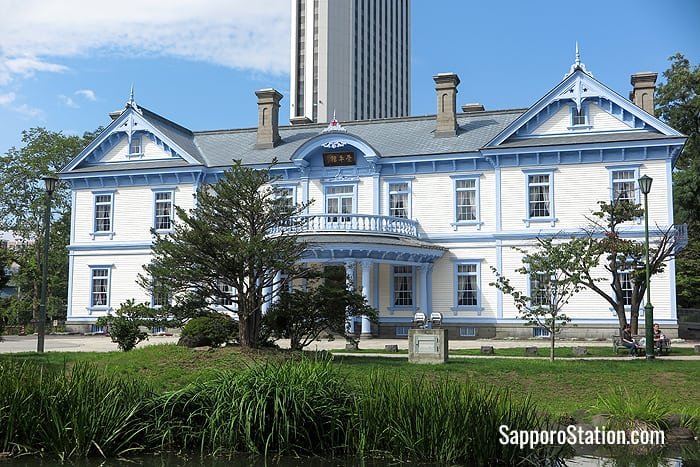
The Hoheikan building in Nakajima Park
Designed by Yoshiyuki Adachi, who also designed the Sapporo Clock Tower, the Hoheikan was built in an American style, but with Japanese building techniques. Because it is a rare example of early Meiji era architecture it was nationally designated as an Important Cultural Property in 1964. Visitors to the Hoheikan can view interior rooms restored to their Meiji era appearance.
The History of the Hoheikan
The Hoheikan was built in 1880 by the Hokkaido Development Commission as a government-run Western-style hotel for visiting guests and dignitaries. Its first guest was Emperor Meiji, who stayed there for four days from August 30th to September 2nd, 1881. With its status raised as a “temporary palace”, the hotel became popular with visiting officials and nobility. The future Emperor Taisho stayed here in 1911 and the future Emperor Showa in 1922, both while they were crown princes.
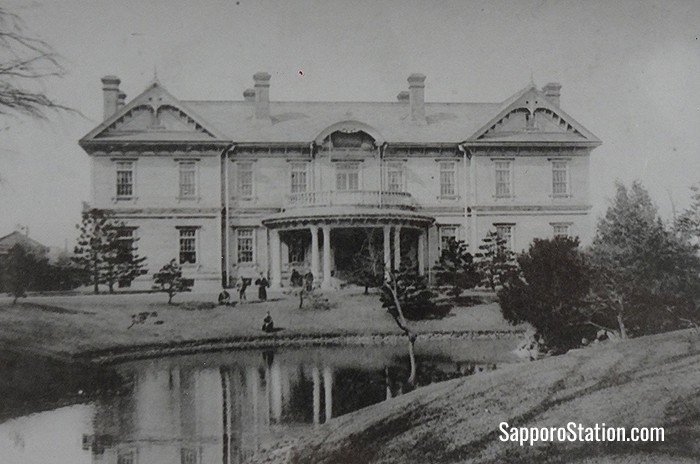
The Hoheikan in 1881. Picture courtesy of Sapporo City Public Archives
Over the years the Hoheikan served many different functions. In 1927 an extension was added to the rear of the building and it was converted into a public hall for musical performances and other cultural activities. During World War 2 the Hoheikan was used by the military and after the war the occupying army used it as accommodation. It was also, for a brief time in 1946, the temporary home of Mitsukoshi Department Store when the US army took over the Mitsukoshi building. However, from the late 1940s onward it was used as a community center and civic hall.
The Hoheikan originally stood in a much more central location, close to the eastern end of Odori Park and just to the north of Sapporo TV Tower. In 1956 it was decided that a new civic hall would be built at this location and there was a debate about whether to demolish or preserve the Hoheikan. Fortunately, it was decided that the original wooden building would be dismantled and reassembled at another site. The Hoheikan was reconstructed in Nakajima Park in May 1958.
In its new location the Hoheikan became a popular wedding venue and many thousands of couples were married here. From 2012 to March 2016 the building underwent restoration and earthquake-strengthening work, during which interior rooms were restored towards their original Meiji era appearance. The Hoheikan reopened to visitors in June 2016. The public can view the interior during its opening hours, while certain rooms can be rented for events, parties, lectures, and performances. Most rental rooms are available in the evening, with selected ground-floor rooms also available during the day.
The Hoheikan’s original location was on the north side of Odori Park, on the site occupied by a civic center called Kanamoto Hall. On its original site the Hoheikan stood in a large garden designed by the German-American horticultural expert, Louis Boehmer. Boehmer’s landscape garden combined Japanese and Western elements and apparently extended as far as the location of Sapporo TV Tower. Together with the Western-style hotel, it gave this part of Sapporo a distinctive appearance. Sadly Boehmer’s garden was not recreated when the Hoheikan was moved to Nakajima Park. However, visitors to the Hoheikan can view the extensive park grounds from its windows.
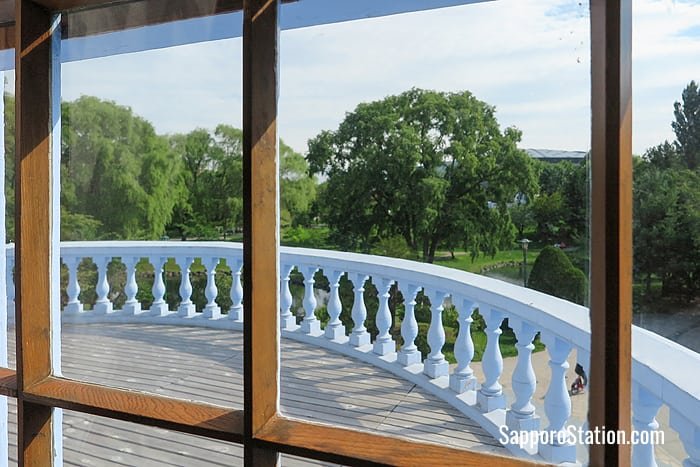
A view over the park from the 2nd floor hallway
Inside the Hoheikan
Visitors to the Hoheikan can wander through the lovingly restored rooms and admire the grand fireplaces, elegant curtains, fine plasterwork, and gorgeous chandeliers. An English language brochure is available which has lots of information on the building’s architecture, the interior features, and full details about each of the rooms. Some ground-floor rooms may be unavailable when rented for private use. An elevator in the annex provides access to the 2nd floor.
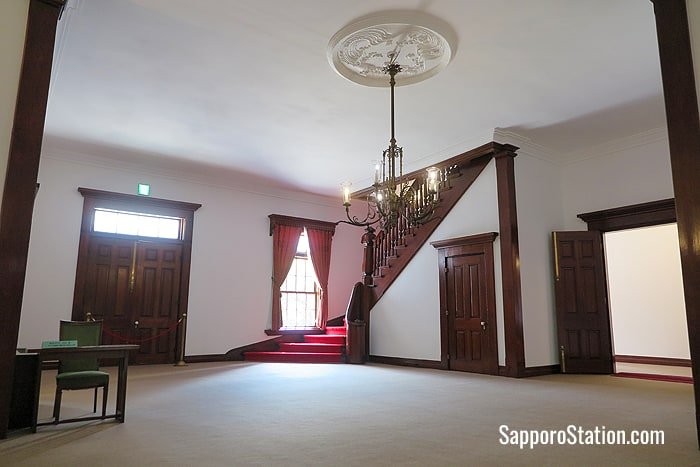
The entrance lobby
Several rooms have video presentations about the Hoheikan’s construction and history which are projected onto the walls.
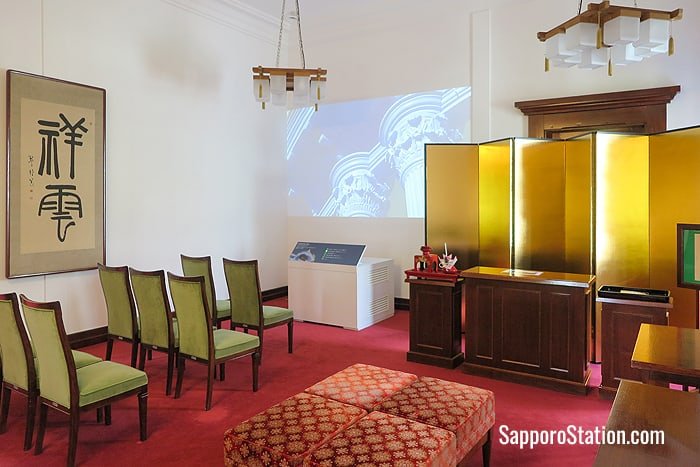
Videos are projected on the walls of the Tsubaki Room
Various items are displayed throughout the building and the rooms are furnished with reproductions of the original furniture based on historical sources.
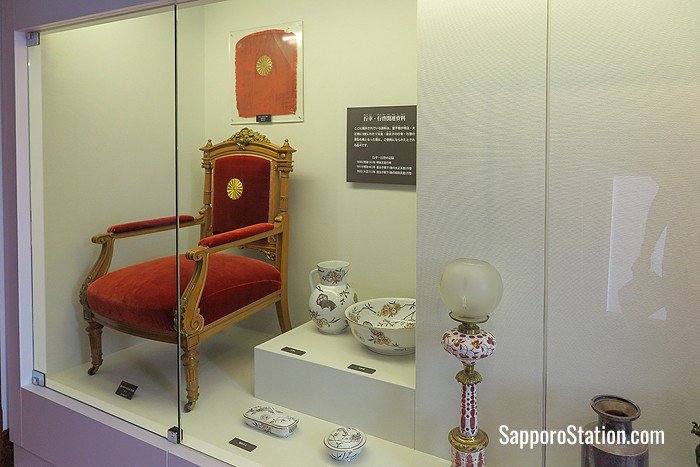
Items used during imperial visits are on display in the Murasaki Room
Visitors can also view the rooms used by Emperor Meiji during his 1881 visit to Sapporo.
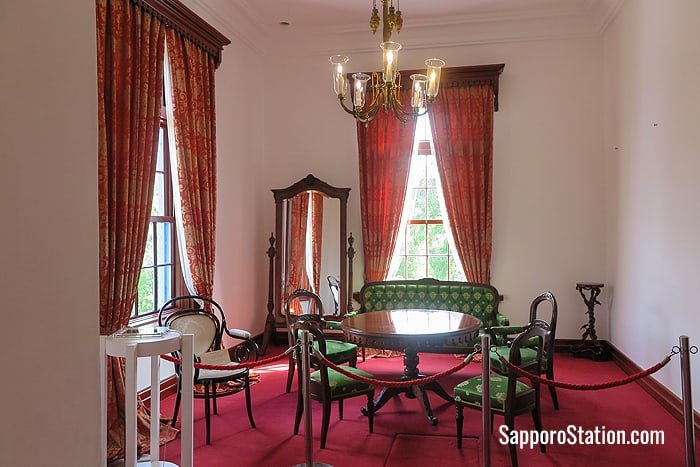
The Ume Room was part of the Emperor’s private suite in 1881
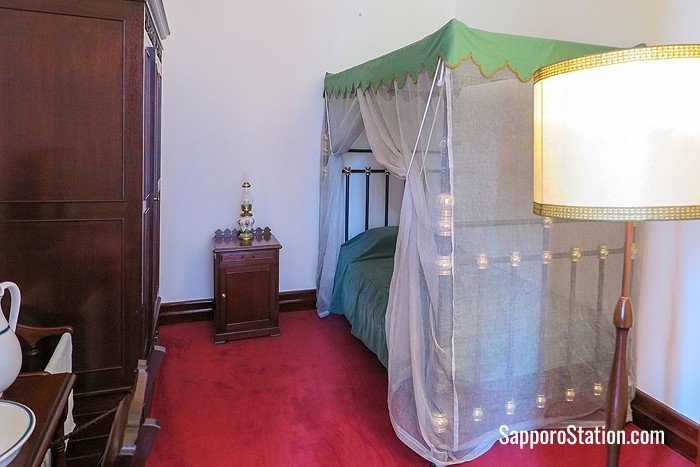
The Ume-Nema Room was the Emperor Meiji’s bedroom
The Hiroma or “Hall” on the 2nd floor is the largest room in the Hoheikan.
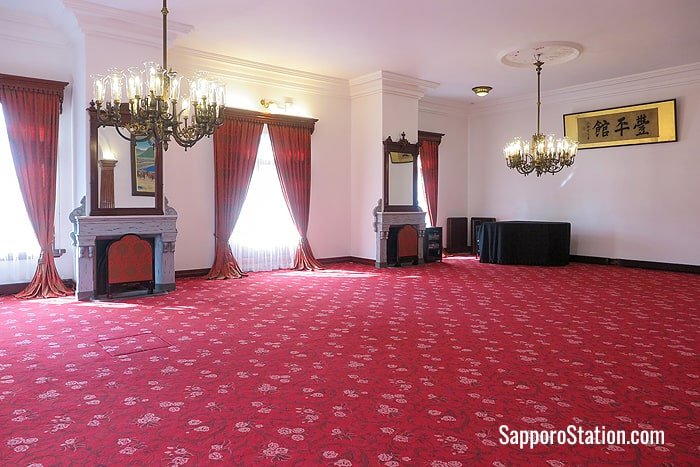
Inside the 2nd floor Hiroma
There is a tablet device in the Hiroma which shows you how the room would have been used in the 19th century, which includes animated dancers at a ball, and a full explanation of the furnishings and decor.
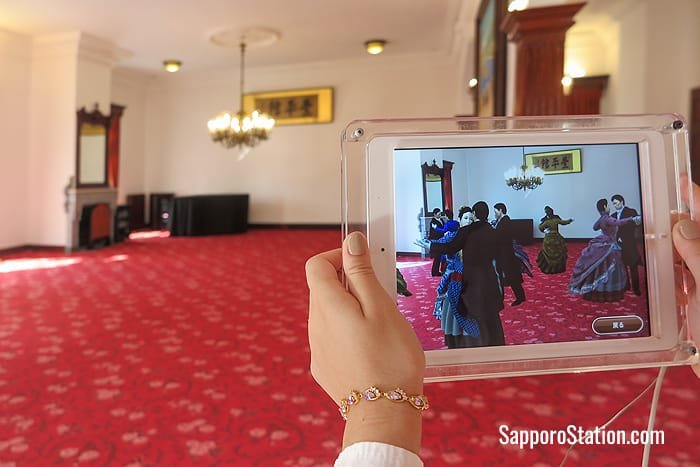
Viewing the room with the tablet reveals a Western-style ball of the 19th century
Remarkably, the building has six restored fireplaces with marble tops and surrounds made mainly from plaster finished to resemble marble. Of its eight chandeliers, four have hung here since the building’s construction, while the other four were restored from original fittings.
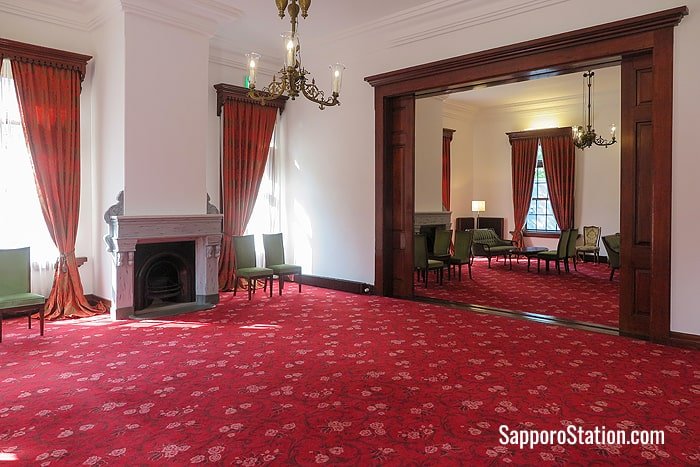
Another view of the Hiroma
After viewing the restored rooms visitors can take a break in the Hoheikan’s café. Café Harunire serves coffee and tea and is open from 10.00 till 16.00 from April 1st to October 31st, and from 11.00 till 15.00 from November 1st to March 31st. Admission to the Hoheikan is required to use the café; a combined admission-and-drink ticket is also available.
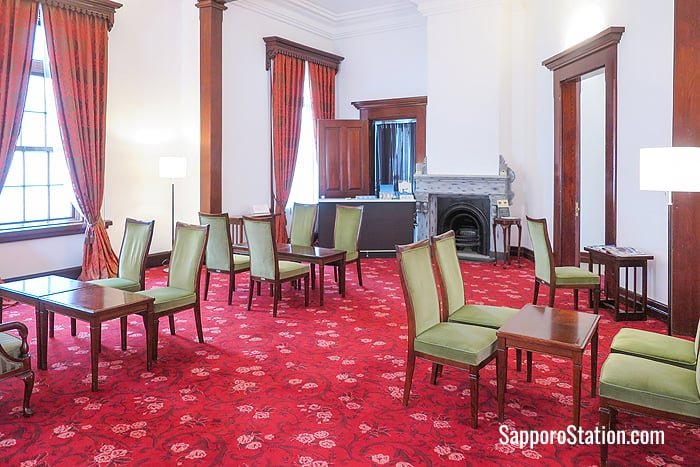
Inside Café Harunire
Location
The Hoheikan is located in the north-west corner of Nakajima Park. The nearest subway station is Nakajima-Koen Station on the Namboku Subway Line; the Hoheikan is about a 5-minute walk from Exit 3. You can also access the Hoheikan via Nakajima-Koen-Dōri stop on the Sapporo Streetcar system, about a 5-minute walk away. There is no general visitor car park.
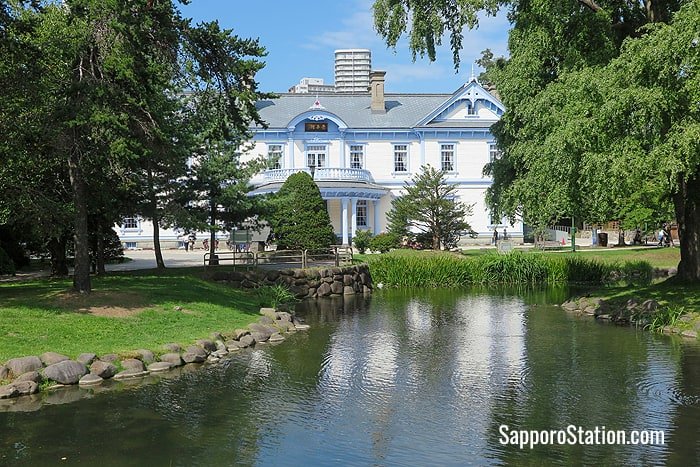
The Hoheikan glimpsed through the trees at Nakajima Park
Opening Hours
Opening Hours: 9.00 – 17.00 (last entry at 16.30). On the fourth Friday of each month, open until 20.00 (last entry at 19.30); additional late-opening dates may be scheduled.
Rooms for Rent: 17.00 – 22.00; selected ground-floor rooms are available from 9.00 – 22.00.
Closed: Every 2nd Tuesday of the month (or the next weekday if Tuesday falls on a national holiday). Also closed December 29th to January 3rd.
Admission
Adults: 350 yen
High school and university students: 150 yen
Children (junior high school age and younger): Free
Article and original photos by Michael Lambe. All rights reserved. Last updated 10-Sep-2026.