The Tokachi is a limited express service linking Sapporo and Obihiro in Hokkaido, with stops for the popular resorts at Tomamu and Sahoro along the way.
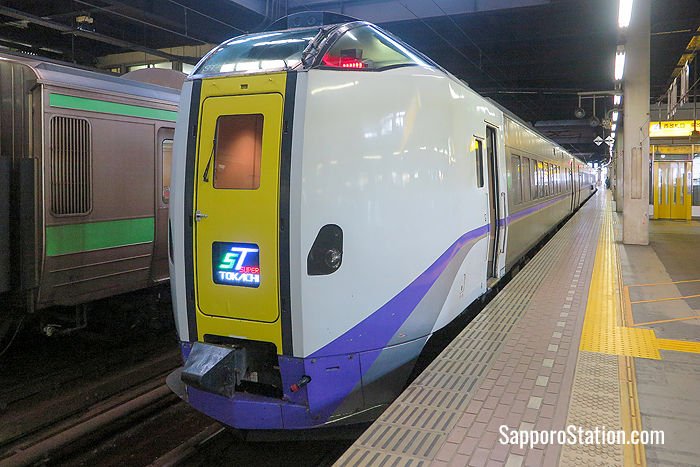
The Limited Express Tokachi at Sapporo Station
Previously this service was called the “Super Tokachi”, but its name was shortened to Tokachi in March 2020. This service is operated by JR Hokkaido and so is fully covered by the Japan Rail Pass. Because all seats are reserved, pass holders must reserve a seat before boarding.
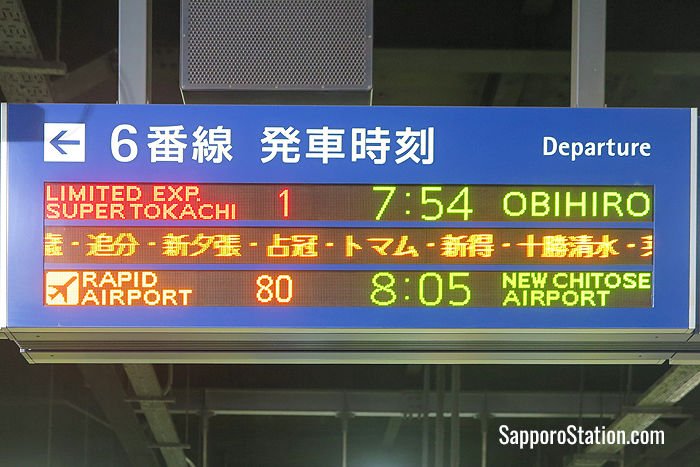
Departure information at Sapporo Station
Key Destinations
The Tokachi stops at the following stations.
Sapporo – Shin-Sapporo – Minami-Chitose – Oiwake – Shin-Yubari – Shimukappu – Tomamu – Shintoku – Tokachi-Shimizu – Memuro – Obihiro
The key destinations are listed below with example ordinary reserved-seat fares and journey times on the Tokachi 1 from Sapporo Station. Fares and schedules can change, so confirm them in JR Hokkaido’s route planner before traveling.
Sapporo Station
The biggest city on the island of Hokkaido, Sapporo is well-known for its organized, grid-like street plan, which makes it very easy to find your way around. The main shopping district lies between Sapporo Station and Odori Park, while the entertainment district of Susukino is located further south. Dotted around the city are several historic 19th century buildings such as the famous Sapporo Clock Tower, the Old Hokkaido Government Office, and the Hoheikan guest house in Nakajima Park. Other popular attractions include the Sapporo Beer Museum and Beer Garden, the Hokkaido University Botanical Gardens, and the ropeway ride to the top of Mount Moiwa. Sapporo also plays host each year to a Snow Festival during which beautiful ice sculptures and giant snow statues decorate the city’s streets and parks.
Transfers can be made here to local services on the Hakodate Main Line, Chitose Line and Gakuen-Toshi Line. Sapporo also has limited express services for Hakodate, Abashiri, Wakkanai, Kushiro, Asahikawa, Obihiro, Noboribetsu and Higashi-Muroran, as well as Airport rapid and semi-rapid services for Otaru and New Chitose Airport. Travelers heading toward Niseko normally transfer at Otaru; selected seasonal limited expresses may run directly.
Shin-Sapporo Station
This station is a convenient exit point for museums on the eastern edge of Sapporo. The Sapporo Science Center is about five minutes on foot from the JR station. For the Hokkaido Museum and Historical Village of Hokkaido, take JR Hokkaido Bus Shin 22 from stop 10 in the north lane of the bus terminal. The Hokkaido Museum ride takes about 15 minutes, and the same bus continues to the Historical Village.
Transfer here to the Tozai Subway Line.
Train fare: 1,210 yen
Train time: 9 minutes
Minami-Chitose Station
This station serves the city of Chitose, a useful base for visiting Lake Shikotsu. Hiking, camping, paddling, fishing and sightseeing cruises are popular around the lake, while Shikotsu Onsen lies on its eastern shore. Among the hotels there, Kyukamura Shikotsuko is a traditional inn with hot-spring bathing facilities and saunas. Another option is Resort Spa Mizu-no-Uta. Its free shuttle serves JR Chitose Station and New Chitose Airport, not Minami-Chitose Station, and must be booked by 19:00 three days in advance; it does not run without reservations. Day-use bathing is offered only with the hotel’s lunch-and-bath plan on operating days, not as bathing-only admission. Travelers approaching from Minami-Chitose should continue to JR Chitose Station or New Chitose Airport for the public Lake Shikotsu bus, or take a taxi; confirm schedules before setting out.
Transfer here to the Sekisho Line and the Airport Branch Line of the Chitose Line.
Train fare: 2,200 yen
Train time: 29 minutes
Oiwake Station
About 12 minutes on foot from the station is Michi-no-Eki Abira D51 Station, a roadside station with an adjoining railway museum. Its preserved vehicles include D51 320, a steam locomotive, and a KiHa 183 series limited express diesel railcar. The site also sells refreshments, baked goods, souvenirs and local produce. Outdoor display and vehicle-interior opening dates are limited, so check the museum’s annual schedule before visiting.
Train fare: 3,270 yen
Train time: 41 minutes
Tomamu Station
Exit here for Tomamu Ski Resort. Winter visitors come for skiing and snowboarding, as well as Mina-Mina Beach, a large indoor wave pool, and the seasonal Ice Village. In the green season, the resort offers outdoor activities and gondola access to Unkai Terrace, an observation area known for views over a “sea of clouds”. A free resort shuttle connects Tomamu Station with the resort. Attraction dates, gondola operation and activities vary with the season and weather, so check details before traveling.
Train fare: 5,880 yen
Train time: 1 hour and 44 minutes
Shintoku Station
This station is the exit point for Tokachi Sahoro Resort, which offers skiing and snowboarding in winter and outdoor activities in the green season. The resort is about 15 minutes from Shintoku Station. Sahoro Resort Hotel operates a free station shuttle only for staying guests, with reservations required by 17:00 on the previous day; unbooked runs are canceled. Day visitors, including visitors to Bear Mountain, should confirm seasonal transport or reserve a taxi. Bear Mountain offers close-up views of Hokkaido brown bears in a semi-natural environment. It operates seasonally; its 2026 season runs from April 25 to October 18 with several scheduled closure days.
Train fare: 6,690 yen
Train time: 2 hours and 7 minutes
Tokachi-Shimizu Station
Tokachi-Shimizu is the nearest station for Tokachi Millennium Forest, a large garden and conservation landscape combining woodland, meadows, designed gardens, farmland and contemporary art. In 2026 it is open from April 18 to October 12, with hours changing during the season, and closes from October 13. Guided Segway tours require reservations, while cheese-making and other programs run on selected dates. The forest is about 15 minutes by taxi from Tokachi-Shimizu Station (approximately 3,000 yen); there is no public-transport connection, so arrange the return journey in advance.
Train fare: 7,130 yen
Train time: 2 hours and 14 minutes
Obihiro Station
Obihiro is a compact base for exploring the Tokachi area, with nearby museums, parks, hot springs and access to Daisetsuzan National Park. Its grid-pattern streets also make the central area easy to navigate.
A short walk north of Obihiro Station, Kita-no-Yatai is a narrow alley lined with compact eateries. The choice ranges from casual izakaya taverns and international food to local Japanese dishes such as obanzai, yakiniku and kushiyaki.
Three major attractions are located in Midorigaoka Park. In the northern part of the park, Obihiro Centennial City Museum covers local natural history, archaeology, Ainu culture, industry and the farming pioneers of the Tokachi area. Its permanent exhibition is open from 9:00-17:00, with last admission at 16:30. The museum closes on Mondays, the day after public holidays under its stated exceptions, and from December 29-January 3. It is about 15 minutes from Obihiro Station by bus or 10 minutes by taxi.
The Hokkaido Obihiro Museum of Art displays modern and contemporary art by regional and international artists. It is open from 9:30-17:00, with last admission at 16:30, and closes on Mondays with holiday exceptions, from December 29-January 3 and during exhibition changes.
Obihiro Zoo occupies the southern end of Midorigaoka Park and has animals ranging from tigers and giraffes to seals and American bison, along with a small amusement area. The zoo is seasonal. In 2026 its summer season runs from April 29 to November 3, while winter opening is limited to Saturdays, Sundays and public holidays from December 5 to February 28, excluding December 29-January 3. Hours also change by season. The zoo is about 10 minutes from Obihiro Station by taxi or 16 minutes by bus.
Obihiro Racecourse (Obihiro Keibajo) is the only surviving track dedicated to Banei racing, in which large draft horses pull weighted sleds over a 200-meter course with two low hills and a stretch of sand. The nearby Obihiro Horse Museum explains the race’s history and the importance of horses to Hokkaido agriculture. The racecourse is about 10 minutes from Obihiro Station by bus or seven minutes by taxi.
Obihiro also has two preserved stations of interest to railway fans. Kofuku Station, whose name means “Happiness Station”, closed in 1987 but retains its platform, two diesel railcars and an antique railway snowplow. It is around 40 minutes from Obihiro Station by bus or 30 minutes by taxi.
Aikoku Station is another preserved station building, with a small museum and a JNR Class 9600 steam locomotive on display. Its name means “Love Country Station”. It is about 30 minutes from Obihiro Station by bus or 20 minutes by taxi. Both Kofuku Station and Aikoku Station are free to enter.
North of Obihiro, Tokachigawa Onsen is known for its plant-derived moor hot-spring water and is about 20 minutes by taxi or roughly 30 minutes by route bus from Obihiro Station. Tokachigawa Onsen Daiichi Hotel has indoor and outdoor riverside baths and accepts day visitors. The hotel is served by the public route bus from Obihiro Station. An accommodation promotion waives the round-trip bus fare for registered hotel guests through March 31, 2027, but this is not a dedicated hotel shuttle; check the terms when booking. Daiichi Hotel accepts walk-in day bathing from 13:00-21:00 (from 13:30 on Mondays and Thursdays), subject to restrictions during busy or special periods.
For a trip into the countryside, Lake Shikaribetsu in Daisetsuzan National Park is about one hour and 40 minutes from Obihiro Station by direct bus, or around one hour and 10 minutes by car. Summer activities include hiking and canoeing, and the small Shikaribetsu Kohan Onsen resort stands on the lake’s western shore. When the lake freezes, Shikaribetsu Kotan creates ice-and-snow structures on the lake for a limited period, usually from late January into March; dates, facilities and activities change each winter and should be checked before travel. Hotel Fusui offers lake-view rooms, indoor and outdoor mineral baths, and a restaurant serving Japanese cuisine.
Obihiro is served by Tokachi-Obihiro Airport, which has regular direct flights to and from Tokyo’s Haneda Airport. Other seasonal or temporary routes may operate, so check the airport’s latest flight schedule. Airport buses connect the airport with Obihiro Station and city hotels in about 35-45 minutes; the journey by road is roughly 40 minutes.
Train fare: 8,120 yen
Train time: 2 hours and 45 minutes
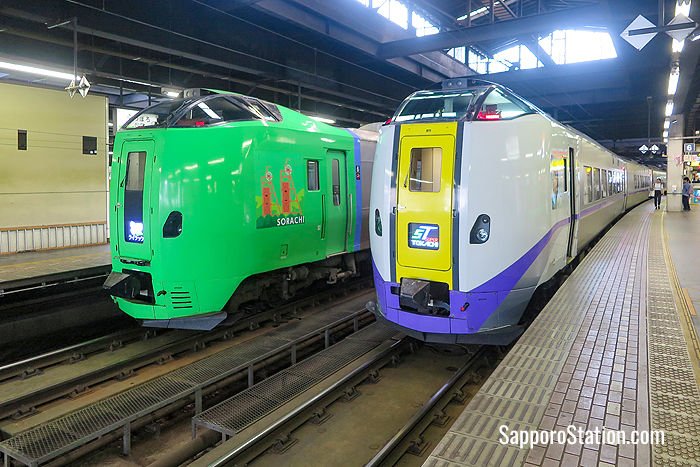
A Limited Express Lilac (#789 series) train alongside a Tokachi (#261 series) train at Sapporo Station
About the Tokachi
The Tokachi normally uses a four-car KiHa 261 series train. Car 1 is the Green Car and Cars 2-4 provide ordinary reserved seating; there are no non-reserved seats. The train is non-smoking and has luggage space in every car. The standard formation places a multipurpose room in Car 1 and wheelchair space and an accessible toilet in Car 3, although formations and facilities can change.
The Tokachi makes 5 return services between Sapporo and Obihiro each day. Another limited express service, the Ozora, follows the same route as the Tokachi but continues beyond Obihiro to Kushiro. The Ozora runs 6 return services between Sapporo and Obihiro each day.
Useful Information
To plan your journey on this route use the timetable and route finder and the downloadable route map that can be found on the official JR Hokkaido English language website.
Article and original photos by Michael Lambe. All rights reserved. Last updated 24-Aug-2026.