Nakajima Park is a large park in the city of Sapporo which has multiple facilities and locations of cultural interest. Covering about 24 hectares, the park has over 5,000 trees including elms, maples, gingkos, yews, and spruces. Cherry blossom, trailing wisteria, and roses bring color to the park throughout the seasons.
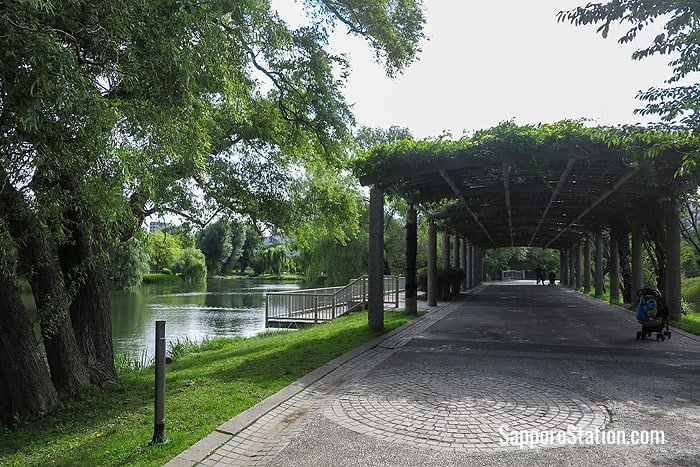
Nakajima Park is a pleasant location for a stroll or a picnic
The History of Nakajima Park
The main river flowing through Sapporo, and its main source of water, is the Toyohira River which flows to the east of Nakajima Park. In 1869, when the city of Sapporo was first established, the Toyohira had several branches, most of which have since disappeared from the surface. One surviving waterway is the Kamokamo River, which runs along the western side of the park and forms the upper section of the Sosei River. The area between the Kamokamo River and the Toyohira River was called Kamokamo Nakajima, referring to the land between the river channels.
Wood for the construction of the new city was carried downstream on the Toyohira River and then via the Kamokamo River and Soseigawa Canal into the city. In the early 1870s, a timber-storage pond was created at Kamokamo Nakajima, while a sluice controlled water entering the Kamokamo from the Toyohira. The storage pond was the predecessor of the park’s Shobuike Pond.
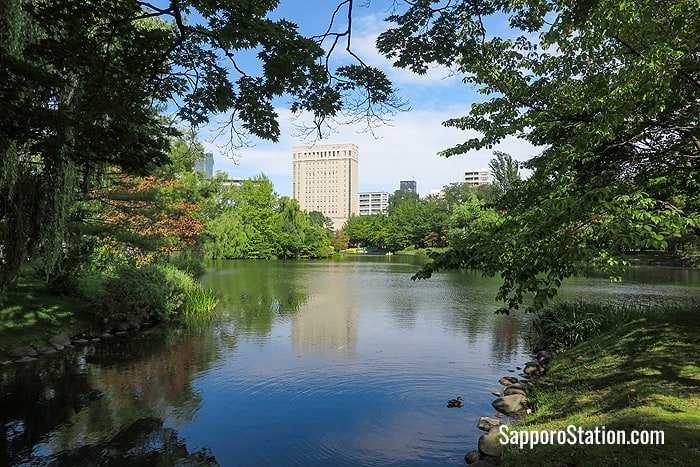
The current Shobuike Pond
In the early 1880s there were competing proposals to use the land as a park or as farmland to support a local school. The park proposal prevailed: the area was incorporated into Sapporo as Nakajima Amusement Park in December 1886, and park development began in 1887. As an amusement park, this location was used for expositions, fairs, fireworks displays, sumo wrestling contests, and other events and there was also a racecourse for horse racing. In 1907 Sapporo Racecourse moved to its current location in the north of the city, and in the same year, the landscape gardener Nagaoka Yasuhei was invited to redesign the park. Nagaoka Yasuhei was a pioneer of modern park design in Japan, and in Sapporo he also designed Odori Park in the city center, and Maruyama Park on the west side of the city. Nakajima Amusement Park was renamed Nakajima Park in 1910.
Sapporo was selected as the location of the 1940 Winter Olympics, and Nakajima Park was intended to host skating events. However, Japan relinquished the Games in 1938 during the war in China. During World War 2, parts of the park were used for growing food supplies. For a short time after the war it was also the site of a barracks for the occupying American forces. However, since that time Nakajima Park has continued to be an important recreational location in the city of Sapporo and a home to many important cultural facilities.
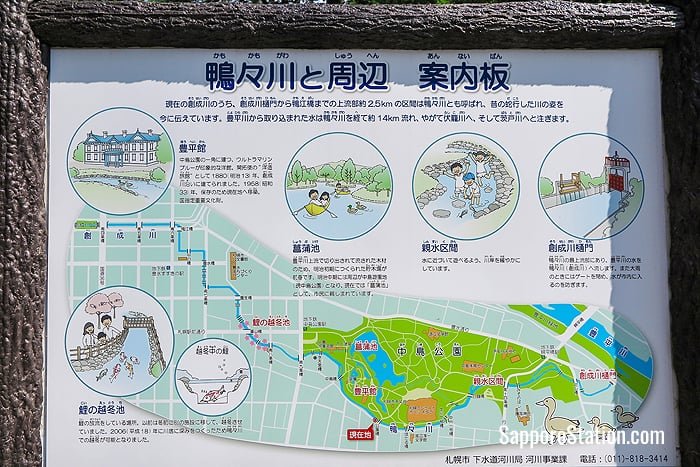
Today, maps in the park help you find your way around
Things to See
Here is a list of the park’s chief attractions.
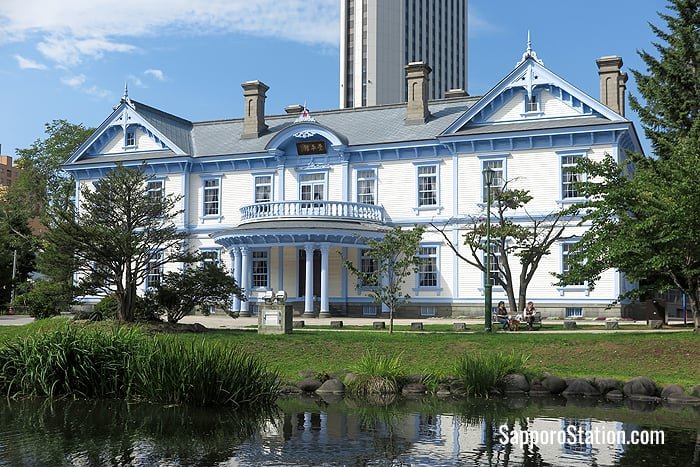
The Hoheikan
The Hoheikan is probably the most popular attraction in Nakajima Park. This historic building was originally a Western-style hotel built in 1880 and it was located in a more central location close to Odori Park. It was moved to its current location in the north-west corner of Nakajima Park in 1958 and nationally designated as an Important Cultural property in 1964. Visitors can view rooms restored towards their Meiji era appearance, including the suite where Emperor Meiji stayed in 1881.
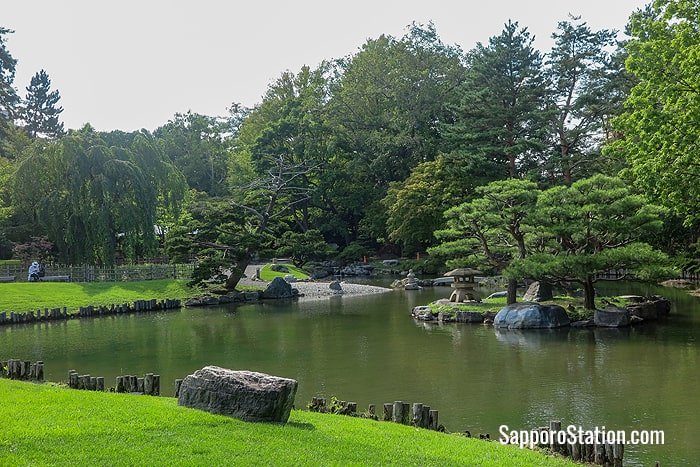
The Japanese Garden
The Japanese Garden is a traditional stroll garden located behind the Hoheikan, with a pond, waterfalls, decorative shrubs and trees such as weeping cherries and maple. First opened in 1963, the garden’s 12 stone lanterns are modelled after famous lanterns from around Japan. In one corner of the garden is a small tea house called Hassoan. This tea house is traditionally attributed to the tea master Kobori Enshu (1579-1647) and is said to have originated at Komuro Castle in Shiga Prefecture. It was brought to Sapporo in 1919 and moved into the park’s Japanese Garden in 1971. Designated a National Treasure under the former law in 1936, it became an Important Cultural Property in 1950. The garden is free to visit from 9.00 till 17.00 during its open season, roughly late April to early November, and is closed in winter. Hassoan can be viewed from outside only.
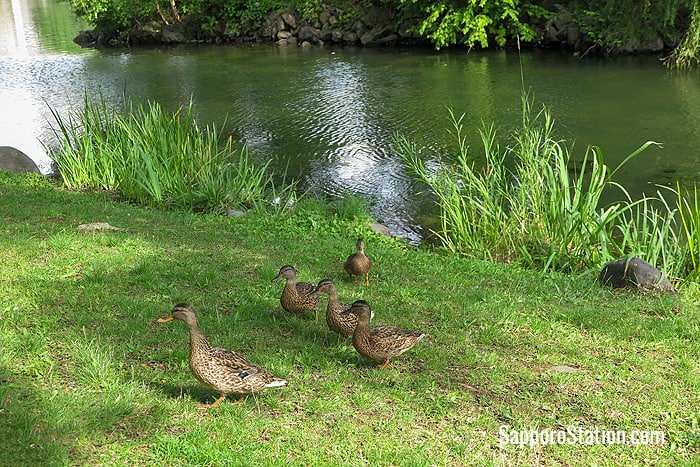
Ducks by Shobuike Pond
The Shobuike Pond is a large pond which dominates the northern end of the park. The pond is home to ducks, koi carp, and turtles, and rental boats are available seasonally, subject to operating dates and weather conditions.
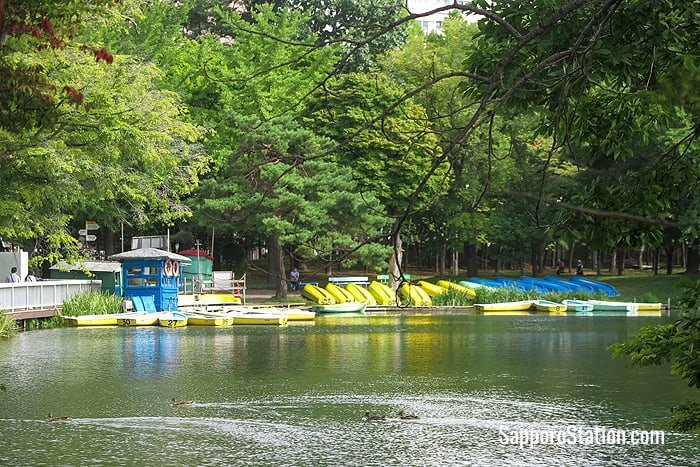
Boats on Shobuike Pond
Sapporo City Observatory is located to the south of the Hoheikan. Opened in 1958, this small observatory has a refracting telescope with a 20 cm diameter lens. Admission is free, with daytime viewing from 10.00 till 12.00 and 14.00 till 16.00; there is no afternoon session on Tuesdays. Evening observations are held on selected dates. Regular closures include Mondays, the day after a public holiday, and December 29th to January 3rd, with adjustments when closure dates coincide with holidays or weekends.
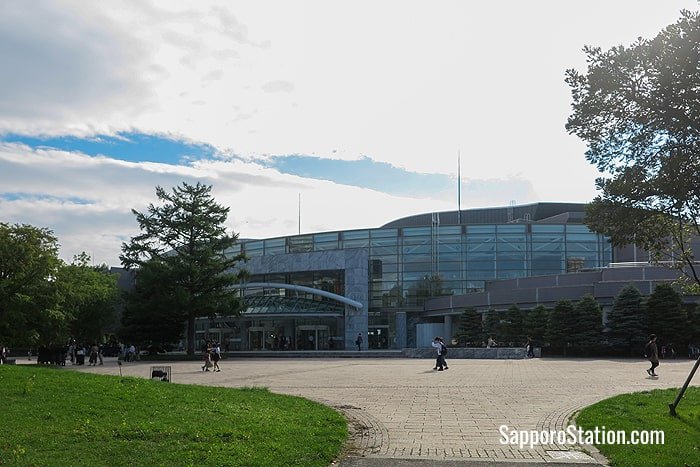
Sapporo Concert Hall Kitara
Sapporo Concert Hall Kitara is a large music venue on the west side of the park which first opened in 1997 and which hosts top musical performers from across Japan and overseas. Kitara has a large Main Hall with seating for 2,008 people and a smaller Chamber Music Hall with seating for 453. Seating is also available for wheelchair users. There are also rehearsal rooms, a souvenir shop, and a terrace restaurant which opens on performance days. The Main Hall features a massive organ with 4,976 pipes which was built by the organ builder Alfred Kern of Strasbourg, France. Kitara’s performance schedule can be viewed on its English language website.
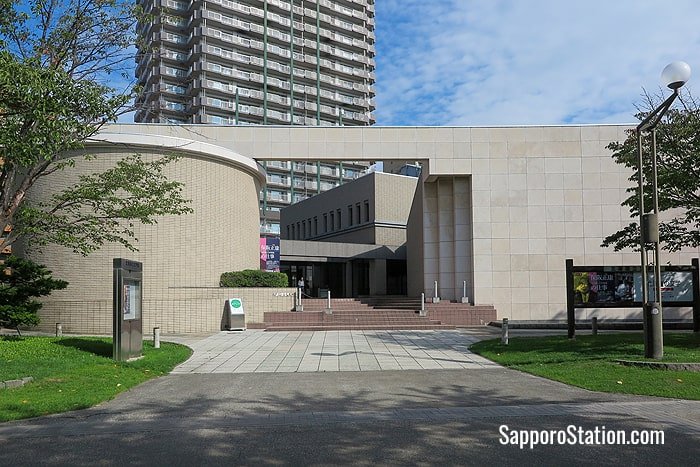
Hokkaido Museum of Literature
Hokkaido Museum of Literature is located on the east side of the park. The museum is closed from September 10th to November 27th, 2026 for air-conditioning work. It is scheduled to reopen on November 28th with a renewed permanent exhibition. This museum opened in 1995 and houses a collection of works by authors associated with Hokkaido such as Takuboku Ishikawa, Takeo Arishima, Takiji Kobayashi, and Ayako Miura. The permanent exhibition covers the history of literature in Hokkaido, including indigenous Ainu literature, children’s literature, poetry, letters, essays, and fiction. The museum also has a café and a shop selling original souvenirs.
Kogumaza at the northern end of the park is a children’s puppet theatre. Its regular opening hours are Tuesday to Sunday from 9.00 till 17.00, with performances mainly on weekends and public holidays. Show times and ticket arrangements vary by production.
Gokoku Shrine is a pleasant shrine on the south west side of Nakajima Park. The shrine was founded in 1879 in memory of local soldiers who died two years before in the Satsuma Rebellion. The shrine grounds are a popular cherry blossom viewing spot in the spring.
Nakajima Park also has some sporting facilities. Nakajima Sports Center offers sports classes and has facilities for table tennis, badminton, and volleyball. There are also open-air tennis courts at the southern end of the park. Cross-country skiing is a popular activity in the park during the winter months, with seasonal equipment rental from the Sports Center. In the 2026 winter season, ski, boot and pole rental cost 1,000 yen per visit for nonresident adults, while Sapporo residents, under-18s and students could borrow equipment free. Opening dates depend on snow conditions, and visitors should check the season’s arrangements before going.
Regular Events
Weekend flea markets are often held in Nakajima Park between April and October. Below are some other seasonal events that are regularly held in the park. The flea markets and gardening market take place in Jiyu Hiroba (“Liberty Plaza”), just south of the Kitara concert hall; other events use different parts of the park.
Yuki Akari is held during the Sapporo Snow Festival in February, with snow candles lighting the park’s 9-jo Plaza. Dates and duration vary; the 2026 event took place on February 7th and 8th.
Sapporo Gardening Market was relaunched as Hana to Kurashi no Sapporo Marche in 2026. That year’s market ran from May 16th to 24th, with flowers, plants and gardening goods joined by household goods, food stalls and workshops. Dates and duration are announced for each year’s event.
Sapporo Festival takes place in mid-June and fills the park’s paths with food and drink stalls, games, and carnival-style attractions such as a haunted house. The number of stalls and entertainment lineup vary from year to year.
Toshi-no-Ichi is a year-end market held in December at which people buy their traditional New Year’s decorations.
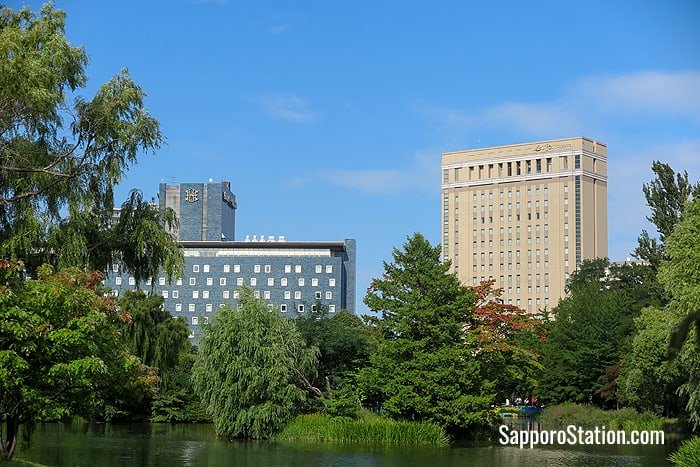
Sapporo Park Hotel (left) and Hotel Lifort (right) can be seen from the park
Hotels by Nakajima Park
In a relatively quiet location, but with easy access to the Susukino entertainment district and excellent public transport links, the Nakajima Park area is a popular location in which to stay. Several hotels are located near Nakajima Park and overlook its grounds. These include mid-range hotels such as Hotel Vista Sapporo Nakajima Koen, Hotel Lifort Sapporo, and Hotel Mystays Sapporo Nakajima Park and luxury hotels such as Premier Hotel Nakajima Park Sapporo and Sapporo Park Hotel.
Sapporo Park Hotel is scheduled to close on February 28th, 2027 for redevelopment, so it is not an option for stays after that date.
Location
Nakajima Park is located to the south of Sapporo’s Susukino entertainment district and is accessible via the city’s subway and streetcar systems. Two stations on the Namboku Subway Line give immediate access to the park: Nakajima-Koen Station is located at the northern end of the park, and Horohira-Bashi Station is located at its southern end. The streetcar stop, Nakajima-Koen-Dori Station is located on the park’s west side and is convenient for the Sapporo City Observatory, Sapporo Concert Hall, and the Hoheikan.
Article and original photos by Michael Lambe. All rights reserved. Last updated 11-Sep-2026.