Nijo Market is a well-known fish market in central Sapporo which is popular for both its fresh seafood restaurants and for its colorful stalls which are heaped with displays of crab, salmon, tuna, sea urchin, salmon roe, and shellfish. Nicknamed “Sapporo’s Public Kitchen”, the market’s convenient location has made it popular with both local citizens, and also tourists who come here to buy fresh seafood souvenirs, to photograph impressive displays of crab and other marine products, and to enjoy a meal or a drink in one of the many restaurants and eateries located inside the market.
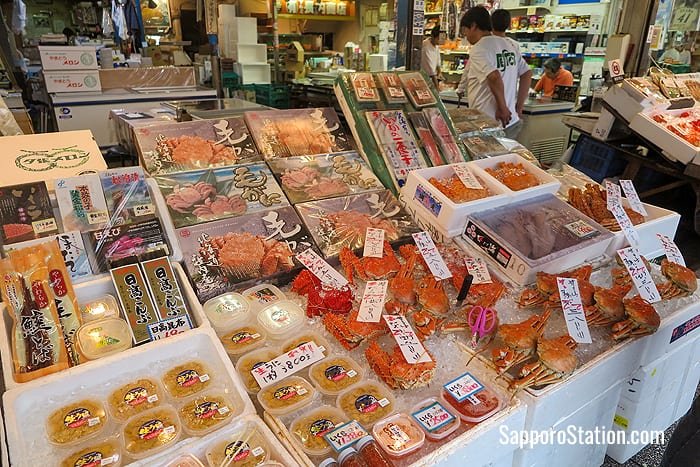
A typical seafood display at Sapporo’s Nijo Market
Several restaurants are located among the seafood stores along the market’s arcades. Noren Yokocho (or “Curtain Alley”) is another dining area, with small restaurants, bars and casual eateries. Some shops offer English-language assistance, but availability varies. The most popular dish is kaisendon, a bowl of rice topped with your choice of fresh sashimi, but sushi is also a popular choice. Many of the seafood stores with their shop front stalls also have a sit-down area inside where you can enjoy some fresh scallops, crab, or oysters which can be cooked up for you right on the spot.
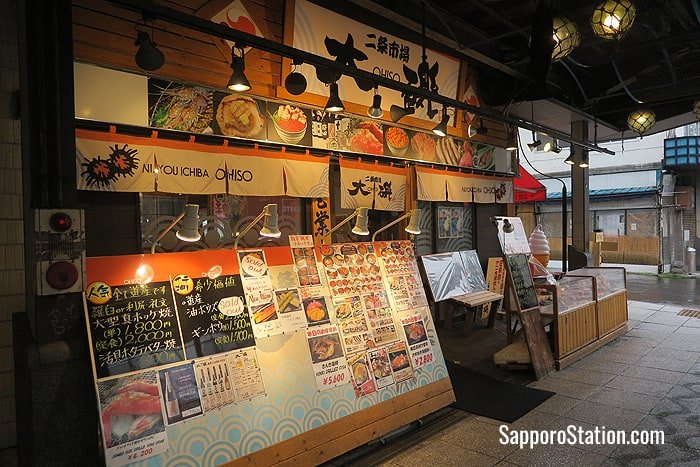
Ohiso is a popular restaurant on the north side of the market which offers a huge menu of sashimi, kaisendon, and grilled fish
Nijo Market has roofed arcades which makes it a pleasant location for shopping even on a rainy day. On sunny days, the arcades are hung with noren curtains to protect the seafood from the heat of the sun, and the ultramarine color of these noren is a distinctive feature of this market. From the arcade roof hang ball-shaped lights hung in netting; these are made from the glass floats fishermen once used to keep their nets from sinking.
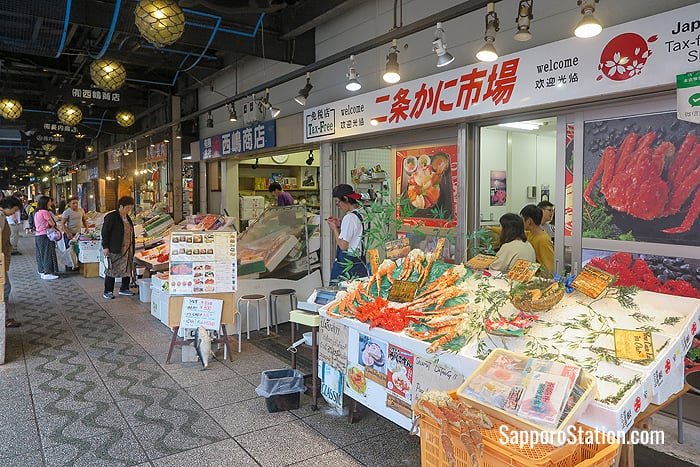
Nijo Kani Ichiba or “Nijo Crab Market” is a crab specialty store which has an eat-in area. You can choose your crab and have it boiled and ready to eat right away
Nijo Market’s shops generally open around 7.00 and close around 17.00, although each business keeps its own hours and some restaurants open later. Most stores display and sell fresh Hokkaido seafood bought the same day from the Sapporo Central Wholesale Market, however some stores also sell fruit and vegetables, local beverages, and even souvenir sweets.
Nijo Market History
The roots of Nijo Market date back over a hundred years to the Meiji era (1868 – 1912). Its origins are linked to fishermen bringing fish from Ishikari Bay to sell beside the Soseigawa Canal, in an area known as Uomachi or “Fish Town”. Fish sellers first traded on the west bank, and some later opened shops on the east bank, where thirteen businesses formed an association that became the basis of Nijo Market. The whole area was destroyed by a fire in 1902, but a fish market was gradually rebuilt along the Soseigawa Canal’s east side with many small stores and restaurants providing the basis for today’s market. Prior to World War 2 the market was known as the Chuo Ichiba or “Central Market”, but after the war Nijo Ichiba or “Nijo Market” became its established name. The market’s current arcade building was completed in 1993, and the restaurant alley, which is called “Noren Yokocho” was added in 2007.
Tax-Free Shopping
Ask individual shops whether they offer tax-free shopping and how to complete the procedure before paying. Eligibility depends on the visitor and the goods being purchased, and you should bring your passport. Do not assume that receipts from different market shops can be combined or taken to a shared refund counter. Food eaten during your visit is not eligible.
Eligible shoppers pay the tax-inclusive price and receive a refund after Customs confirms that the goods are being taken out of Japan within 90 days of purchase. Ask the shop how the refund will be paid.
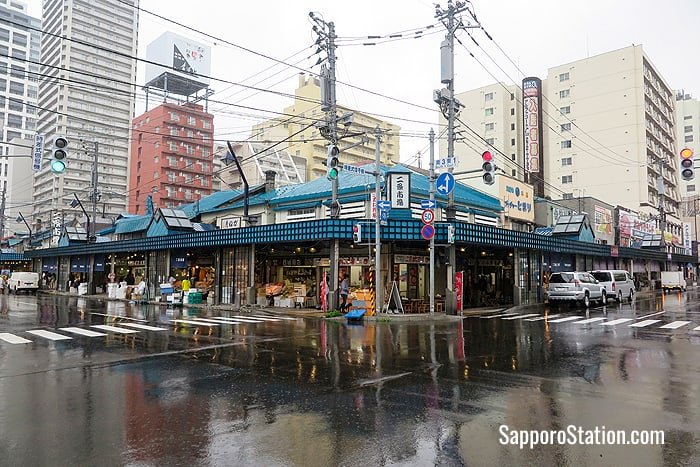
Nijo Market’s covered arcades make it a convenient rainy day sightseeing location
Location
Nijo Market is about a 5-minute walk south from exit 3 of Bus Center-Mae Station on the Tozai Subway Line, or about a 5-minute walk south-east from exit 34 of Odori Station on the Tozai, Toho and Namboku subway lines. This area is also convenient for Odori Park, Sapporo TV Tower, the Susukino District and Tanukikoji Shopping Street.
Other Markets in Sapporo
Nijo Market’s central location makes it very easy to access. However, Sapporo has a number of other markets that are worth a visit if you have the time.
Sapporo Central Wholesale Market Tours
The general public cannot shop inside Sapporo Central Wholesale Market, but visits can be arranged between 5.00 and 16.00 on market opening days. Visitors watch from second-floor viewing corridors rather than enter the auction floor. For the liveliest activity, arrive for the seafood auction between 5.15 and around 6.00, or the fruit and vegetable auction between 6.30 and around 7.20.
Individual visits for up to 9 people must be booked at least 2 days ahead. Groups of 10 or more must book at least 10 days ahead and receive a guided visit lasting about 90 minutes. Book by telephone (011-611-3176) or fax (011-611-3179); telephone enquiries are accepted between 7.45 and 16.15. Ask about language arrangements when booking. When making a tour reservation please supply your name, contact telephone number, the desired date and time of your tour, the number of people in your tour group, and your means of transportation to the market. Visits are not available on Sundays, holidays or other market closure days. All visits, including the exhibition and reference rooms, are suspended from December 2nd, 2026 to January 4th, 2027 for the busy season.
Sapporo Curb Market
Sapporo Curb Market (Sapporo Jogai Shijo) is a market for the general public which is next to Sapporo Central Wholesale Market. Here around 60 retail stores and restaurants sell the marine produce that has been auctioned each morning in the wholesale market. The Curb Market is also known as the “Outer Market” or as “Sapporo Crab Market” because of the huge quantity of cheap, high quality crab that is on sale, but there is a wide range of other seafood products on sale here too.
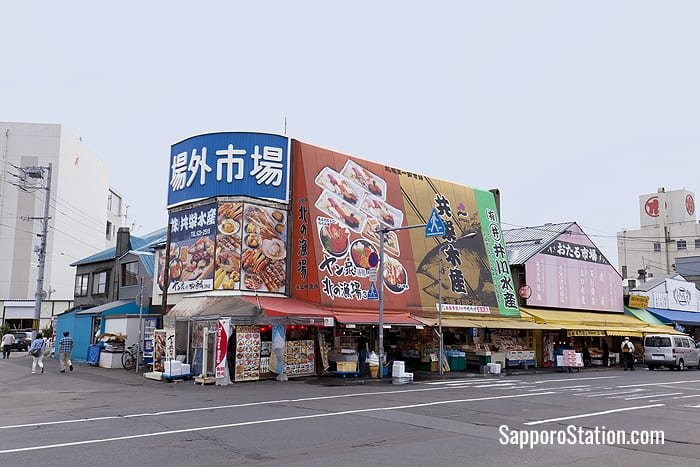
Sapporo Curb Market is next to Sapporo Central Wholesale Market.
Similar to Nijo Market, kaisendon seafood rice bowls are a popular breakfast dish at the Curb Market’s restaurants. Stores begin to open from 6.00 and restaurants from 7.00, but many close around 15.00. Some larger shops stay open until 17.00, and hours vary by business, so morning or lunchtime is the best time for a market visit. Sapporo Curb Market is about 9 minutes on foot from JR Soen Station on the Gakuentoshi Line and Hakodate Main Line, using the left-hand exit beyond the west ticket gates, or about 7 minutes from exit 5 of Nijuyon-Ken Station on the Tozai Subway Line.
Hakko Gakuen Farm Market
Hakko Gakuen Farm Market is a farmer’s market connected to Hokkaido Agricultural Technical College selling fruit, vegetables, and dairy products. During the summer trading season, soft serve ice cream is a very popular product here.
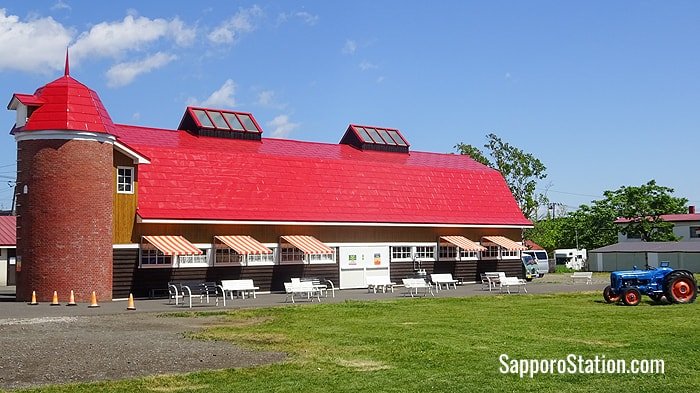
Hakko Gakuen Farm Market is famous for its ice cream
From mid-April to early November the market is open every day except Thursday between 10.00 and 16.00. From mid-November to mid-April it opens between 10.00 and 16.00 on Saturdays, Sundays and Mondays. Check the seasonal changeover dates before visiting in April or November. Hakko Gakuen Farm Market is about a 10-minute walk from Fukuzumi Station on the Toho Subway Line.
Article by Michael Lambe. Photos by Michael Lambe, grand/pixta (6), mataro/pixta (7). All rights reserved. Last updated 11-Sep-2026.